Professional Air Duct Mold Removal Services
Air Duct Cleaning Mold Removal Los Angeles
Mold inside your ductwork does not stay there. Every time your HVAC system runs, it distributes spores through every room in your home. Our certified technicians locate active mold growth, remove it completely using HEPA-rated extraction, and treat the duct interior with EPA-registered antimicrobial solution to stop regrowth at the source. Flat-rate pricing. Transparent air duct cleaning mold removal cost before any work begins. Same-day scheduling across Los Angeles.
The Problem
How Mold Gets Into Your Air Ducts and Why It Spreads Fast
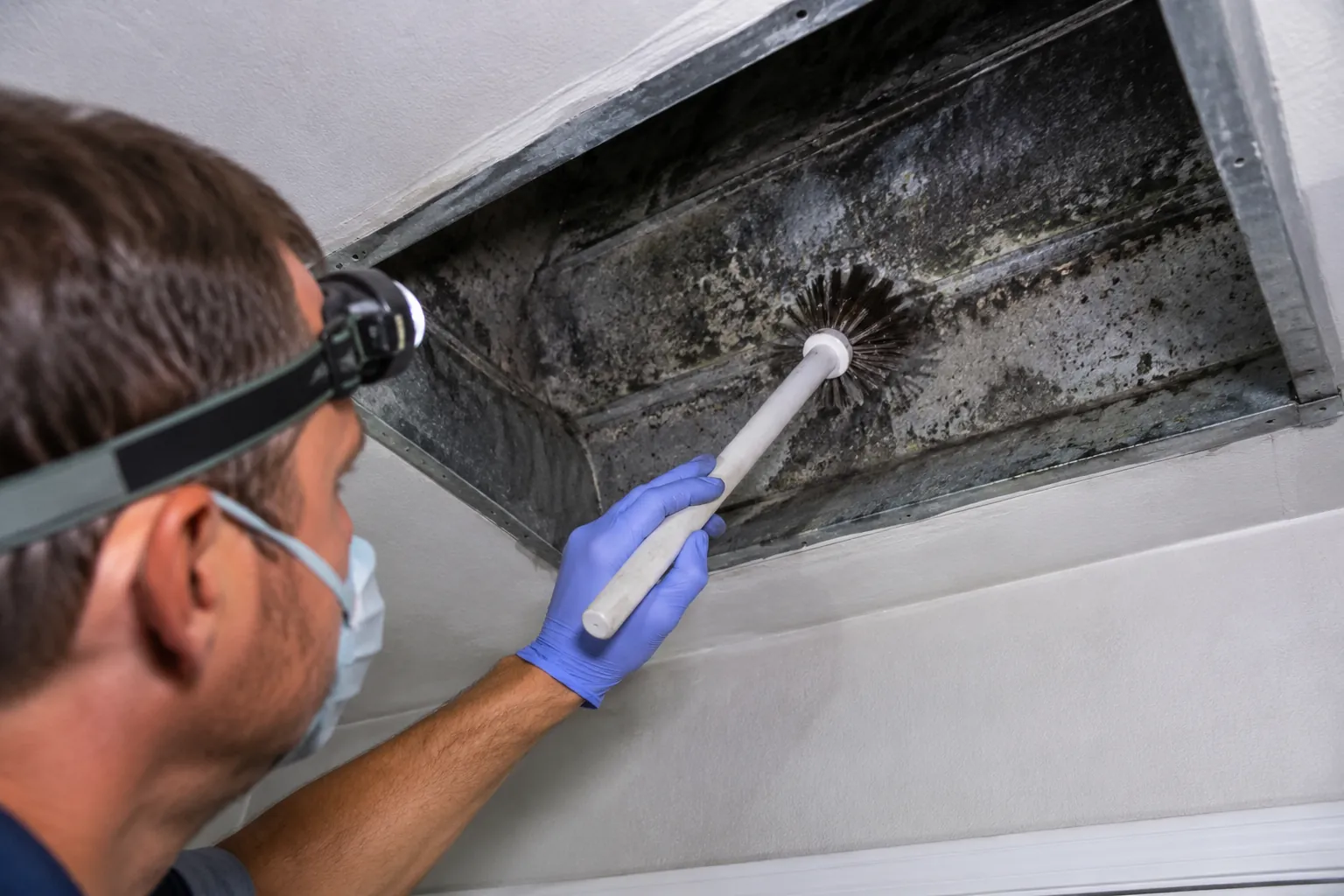
Mold needs two things to grow inside a duct system: organic material to feed on and a moisture source to sustain it. Both are easy to find in a residential HVAC system. Accumulated dust and debris on duct walls provide the food source. Condensation from temperature differentials, a slow evaporator coil drain, or humid outdoor air infiltrating through return leaks provides the moisture. In Los Angeles, coastal humidity along the South Bay and Santa Monica corridor creates persistent moisture pressure on ductwork running through unconditioned attic spaces. When warm, humid air contacts cool metal duct surfaces, condensation forms on the interior walls. Add the fine layer of dust that accumulates in any active duct system and the conditions for mold growth are present year-round, not just during a wet season. Once mold establishes inside a duct system it spreads by releasing spores into the moving airstream. Standard air filtration captures some spore types but not all. Species like Cladosporium and Aspergillus produce spores small enough to pass through mid-grade filters and deposit throughout the home. Stachybotrys, commonly called black mold, produces mycotoxins that travel with the spores and pose serious health risks on repeated exposure.
- ⚠ Condensation on interior duct walls from temperature differentials
- ⚠ Evaporator coil drain pan overflow or slow drainage feeding moisture into the plenum
- ⚠ Humid outdoor air pulled through return duct leaks into the system
- ⚠ Accumulated organic debris inside ducts providing a mold growth medium
The Solution
Removal, Treatment, and Root Cause Correction Together
Physical removal of all mold colonies and contaminated debris through contained HEPA mechanical extraction as part of professional air duct cleaning, followed by EPA-registered antimicrobial treatment of all interior duct surfaces to prevent regrowth on the cleaned substrate, and identification and correction of the moisture source that created the conditions for growth. After extraction, duct sanitizing and deodorizing treats every interior surface to stop regrowth on the cleaned substrate. Addressing any one of these without the other two means the mold returns.
Get Free Estimate →Why It Matters
What Professional Mold Removal From Air Ducts Actually Delivers
Mold Eliminated, Not Just Diluted
HEPA extraction removes mold colonies and spore-loaded debris from duct surfaces entirely. Antimicrobial treatment prevents regrowth on the cleaned surface. This is removal, not filtration.
Airborne Spore Count Drops Immediately
Once the mold source inside the duct system is removed, the HVAC system stops distributing spores through the home. Households with mold-sensitive members notice the difference within days.
Root Cause Identified and Addressed
We locate the moisture source driving mold growth, whether it is a drain pan issue, a return duct leak, or an insulation failure, and provide the fix or recommendation needed to prevent recurrence.
Full Cost Transparency Before Work Starts
Air duct cleaning mold removal cost is one of the most searched questions in this category because pricing is often unclear. You receive an itemized written estimate covering every step before we begin.
Our Process
What to Expect, Step by Step
Mold Assessment and Moisture Source Identification
We inspect the full duct system, evaporator coil, drain pan, and accessible return sections for visible mold growth, water staining, and moisture conditions. The source driving growth is identified before cleaning begins so the treatment plan addresses the actual problem.
Negative Air Containment Setup
HEPA-filtered negative air machines are connected to the duct system before any physical work begins. This creates negative pressure inside the duct network so that dislodged mold spores and debris travel toward the collection unit rather than into the living space.
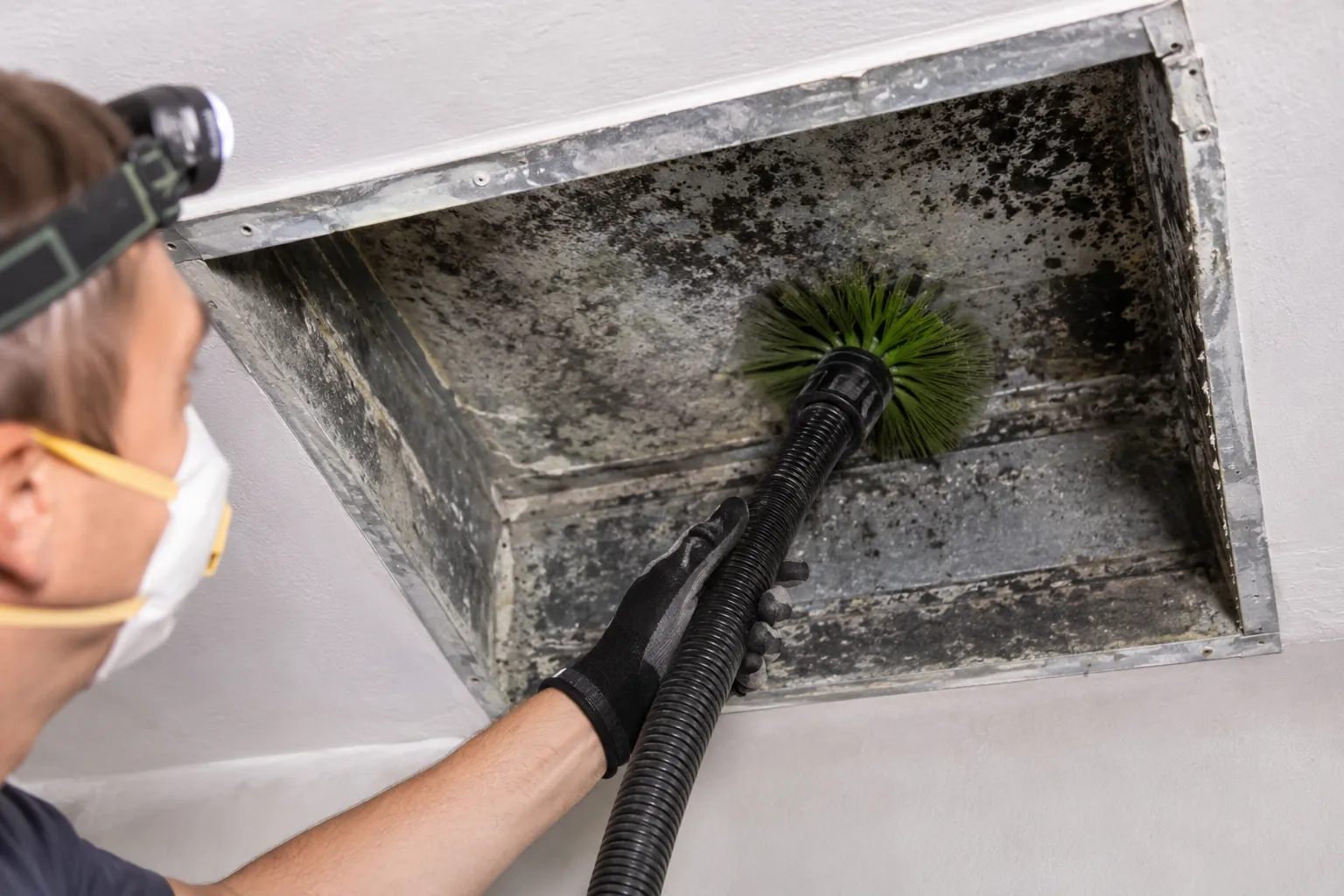
Mechanical Removal and HEPA Extraction
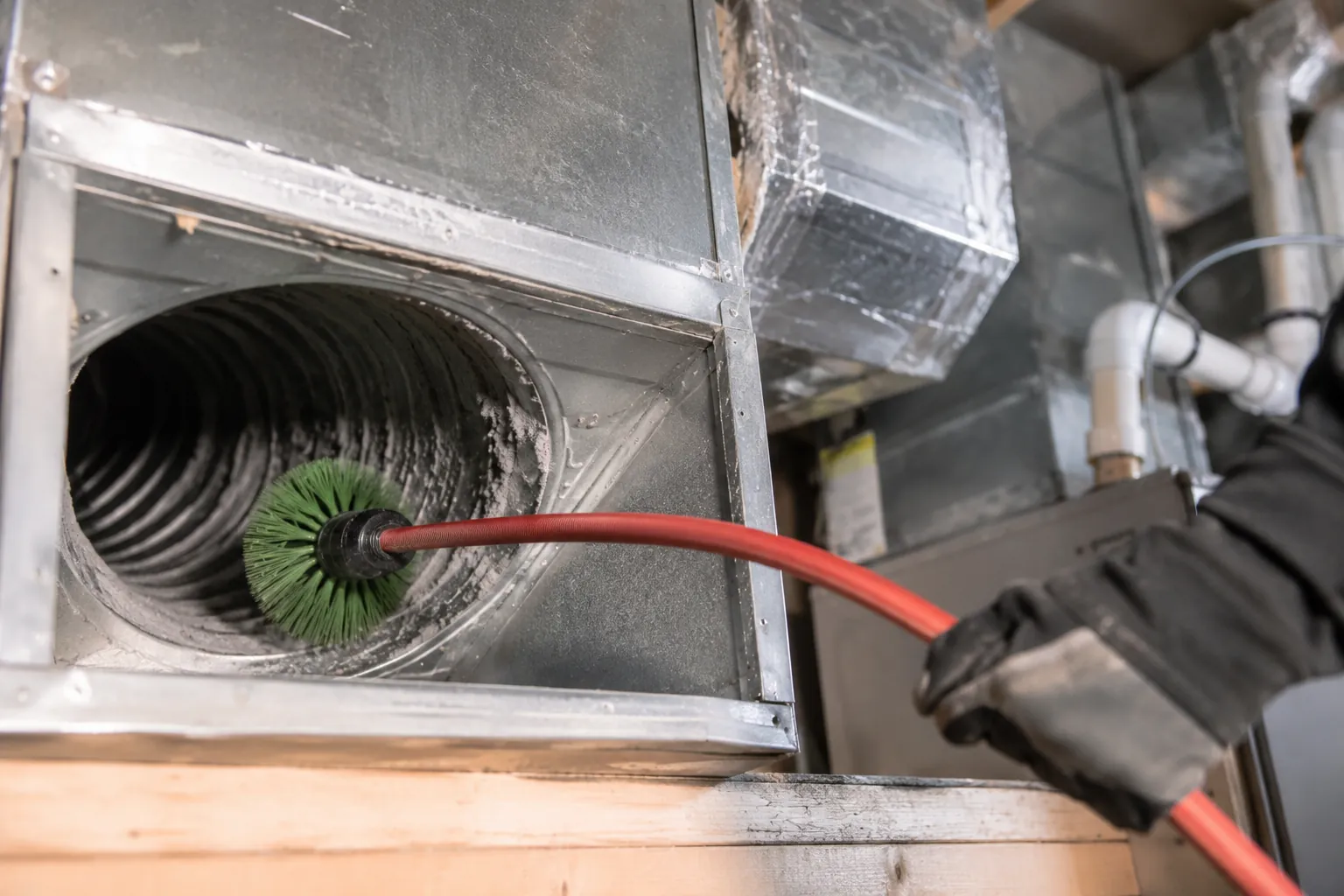
Agitation tools work through all supply and return lines, dislodging mold colonies and contaminated debris from duct wall surfaces. HEPA vacuums capture all material simultaneously. When flex duct sections are heavily contaminated or damaged and cannot be safely restored through cleaning, they are handled through professional air duct repair rather than treated in place.
EPA-Registered Antimicrobial Treatment and Verification
After physical removal, all interior duct surfaces are treated with an EPA-registered antimicrobial agent that inhibits regrowth. Airflow is verified at each register. Moisture source correction is completed or formally documented before we close out the job.
What It Means
Air Duct and Mold Removal: What the Service Covers and Why It Differs From Standard Duct Cleaning
Air duct cleaning and mold removal is a specialized service that goes beyond standard duct cleaning in both scope and protocol. Standard duct cleaning removes accumulated dust, debris, and particulates from duct wall surfaces. Mold remediation in ductwork requires all of that plus biological contamination assessment, containment practices that prevent cross-contamination during the removal process, EPA-registered treatment of all affected surfaces, and moisture source correction to prevent recurrence.
The distinction matters because treating active mold growth with standard cleaning methods alone can worsen the problem. Agitating a mold colony without proper containment sends spores into the air stream. Without antimicrobial surface treatment after cleaning, regrowth on residual organic material can begin within 24 to 48 hours under the right moisture conditions.
Air duct mold removal services in Los Angeles face specific environmental factors that are worth understanding. The Los Angeles basin experiences both coastal humidity from the Pacific and dry inland heat that creates condensation cycles as temperature differentials shift. In communities like Pasadena, where summer days are significantly hotter than the coast, the temperature gap between a cooled interior duct and the unconditioned attic space it runs through creates sustained condensation risk on any duct section with degraded or missing insulation.
Mold removal in air ducts also requires understanding what type of mold is present. Surface mold species like Cladosporium are common, respond well to standard antimicrobial treatment, and do not typically require duct replacement. Stachybotrys (black mold) and heavily colonized Aspergillus growth on porous flex duct material often require section replacement because antimicrobial treatment cannot penetrate deep enough into the substrate to prevent regrowth. Knowing the difference before quoting a price is what separates a proper assessment from a flat-rate cleaning package that may not solve the problem.
Warning Signs
Is There Mold Growing in Your Duct System Right Now?
Tap any sign to understand what it means and what needs to happen next.
! Musty Smell That Appears When the HVAC Runs ⌄
A damp, earthy, or musty odor that is strongest when the system first turns on and fades as air circulates is a reliable early indicator of mold growth inside the duct system or on the evaporator coil. The smell is caused by microbial volatile organic compounds released when airflow disturbs the colony.
! Visible Dark Spots Near Register Openings ⌄
Black, green, or dark brown discoloration around supply register openings is often mold that has grown at the point where conditioned air exits the duct. This is the most visible symptom and almost always indicates more extensive growth further inside the system.
! Household Members With Unexplained Respiratory Symptoms ⌄
Persistent sneezing, nasal congestion, eye irritation, or worsening asthma symptoms that are worse at home than outdoors suggest ongoing airborne exposure to biological contaminants. Mold spore distribution through the HVAC system is one of the most common sources of this pattern.
! History of Water Damage or Flooding Near the HVAC System ⌄
Any prior water intrusion near the air handler, in the attic where ductwork runs, or in crawl spaces below return vents creates ideal mold growth conditions even if the water was dried out promptly. If the duct system was not inspected and treated after a water event, mold growth is likely.
! Condensation on Supply Registers or Duct Exteriors ⌄
Visible moisture on the outside of supply registers or on accessible duct sections indicates a temperature and humidity imbalance inside the system. This is the same condition that drives interior duct mold growth and warrants inspection before it progresses.
! Prior Mold Remediation in the Home ⌄
If visible mold was previously remediated in a bathroom, crawl space, attic, or wall cavity adjacent to HVAC ductwork, spores from the remediated area may have entered the return air system during the event. Post-remediation duct inspection is a standard step that many general contractors do not include.
Deep Dive
Everything You Should Know
Warning Signs
The Indicators That Point Specifically to Mold, Not Just Dirty Ducts
Standard dirty ducts and mold-contaminated ducts share some symptoms but differ in two key ways. A musty biological odor is specific to mold. Respiratory symptoms that improve when household members leave the home and worsen when they return are specific to an indoor biological exposure, and duct mold is among the most common sources. The pattern of symptoms matters. If one person in the household has persistent symptoms and others do not, sensitivity differences may be masking a shared exposure. If symptoms are worst in the morning, after the HVAC system has run overnight, the connection to the duct system is worth investigating before any other explanation. Acting on these signals early keeps the remediation scope manageable. Mold that is caught at the surface growth stage is far less costly to address than mold that has colonized flex duct substrate and requires section replacement throughout the system.
Key Points
- ✓ Musty or earthy odor tied specifically to HVAC operation
- ✓ Visible discoloration at or near supply register openings
- ✓ Respiratory symptoms that follow HVAC run cycles
- ✓ Symptoms that improve away from home and worsen upon return
- ✓ History of moisture events near ductwork or the air handler
- ✓ Prior mold remediation elsewhere in the home without duct inspection
Benefits
What Air Duct Cleaning and Mold Removal Actually Delivers Beyond Spore Reduction
The most immediate result of professional air duct mold remediation is measurable reduction in airborne spore concentration throughout the home. Many households notice improvement in odor and respiratory irritation within days of completed service.The long-term benefit is preserving the HVAC system itself. Mold growth on flex duct liner material progressively degrades the inner surface, increasing airflow resistance and creating additional anchor points for future biological growth. Early remediation protects the duct system before replacement becomes necessary.The cost of delaying remediation compounds over time. A contained moisture issue affecting one duct section frequently spreads into adjacent areas during additional cooling seasons if the underlying moisture condition remains unresolved.
Key Points
- ✓ Airborne spore concentration reduced throughout the home
- ✓ Antimicrobial treatment inhibits recolonization
- ✓ Moisture correction prevents recurring growth cycles
- ✓ Flex duct liner material protected from degradation
- ✓ Early treatment prevents larger future remediation costs
- ✓ Mold-sensitive occupants often notice symptom improvement quickly
Maintenance Tips
How to Prevent Mold From Returning to Your Duct System Between Services
The most common HVAC mold trigger in Los Angeles homes is evaporator drain pan overflow caused by partially blocked condensate lines. Routine condensate line flushing during cooling season helps prevent standing water conditions around the air handler.Return air leaks are another major contributor. Unsealed return duct connections pull humid attic or crawl space air into the HVAC system during operation, sustaining elevated moisture levels inside the duct network.Homes experiencing condensation on supply ducts often benefit from upgraded insulation to reduce thermal transfer between conditioned air and surrounding attic heat.
Key Points
- ✓ Flush condensate drain lines regularly during cooling season
- ✓ Check drain pans for standing water
- ✓ Seal return duct leaks with mastic sealant
- ✓ Install UV-C treatment near evaporator coils where appropriate
- ✓ Upgrade duct insulation in condensation-prone areas
- ✓ Schedule annual HVAC moisture assessment inspections
What's Included
One Written Estimate. Complete Mold Remediation Scope. No Hidden Steps.
Every visit covers the full remediation protocol from initial assessment to post-treatment verification. The cost you receive in writing before we start reflects everything on this list.
- ✓ Full duct system and air handler mold assessment
- ✓ Moisture source identification and documentation
- ✓ Negative air HEPA containment setup
- ✓ Supply duct mechanical cleaning and extraction
- ✓ Return duct mechanical cleaning and extraction
- ✓ Plenum and air handler cabinet cleaning
- ✓ Mold-compromised flex duct section replacement where required
- ✓ All register and grille cleaning
- ✓ EPA-registered antimicrobial surface treatment throughout duct system
- ✓ Post-treatment airflow verification at all registers
- ✓ Moisture source correction or formal written recommendation
- ✓ Written service documentation for remediation records
15+ Years Serving Southern California Homeowners
Our Promise
You Get a Clear Scope, a Written Cost, and Results You Can Verify
Mold remediation is an area where vague assurances about what was treated are easy to make and impossible to verify after the fact. Every service we perform produces a written assessment of what was found, a written estimate of what the remediation covers, and written post-service documentation confirming the work was completed to the stated scope. You have a complete paper record from the initial assessment call to the final job close.
Certified Technicians With Remediation Training
Every mold remediation visit is handled by a certified technician trained in biological contamination protocols for HVAC systems. Not standard duct cleaners rebranded for the job.
Written Cost Before Work Begins
Air duct cleaning mold removal cost is fully itemized in writing before any work starts. Assessment, removal, treatment, and moisture correction are each line-itemed. No scope added after arrival.
Same-Day Scheduling Across LA
Available throughout Los Angeles, Pasadena, Glendale, Burbank, Santa Monica, the San Fernando Valley, and the South Bay. Urgent scheduling for active mold situations or households with symptomatic members.
Workmanship and Recurrence Guarantee
All remediation work is guaranteed. If mold returns in a treated area within the guarantee period due to our work, we return and retreat at no charge.
FAQs
Quick answers from our techs.
Still have a question? Call us, we answer the phone, day or night.
Call (888) 280-2285 →How does mold get inside air ducts?
Mold enters duct systems through two primary pathways: moisture and spore infiltration. AC systems produce condensation, and when humid air meets cold duct surfaces, moisture accumulates especially near the air handler and poorly insulated sections. Mold spores, which exist in virtually all air, settle on these moist surfaces and begin growing. Leaking ducts that admit attic or crawl space air introduce additional moisture and pre-existing mold. Once established, a duct colony spreads spores throughout your home with every HVAC cycle.
What are the health risks of mold in air ducts?
Mold inside ductwork is a serious hazard because the HVAC system actively distributes spores and mycotoxins into every room. Exposure can trigger allergic reactions, chronic respiratory symptoms, persistent coughing, sinus inflammation, headaches, and fatigue. For asthma sufferers, airborne mold is a documented attack trigger. Immunocompromised individuals and children face the highest risk. Both the CDC and EPA identify indoor mold as a significant health hazard requiring professional remediation, not surface sprays or DIY products.
Can I remove mold from air ducts myself with bleach?
No, and attempting it can make the problem significantly worse. Spraying bleach into duct registers introduces moisture (encouraging further growth), rarely reaches the actual mold colony deep inside, and can dislodge spores and spread them through the system before they're killed. Effective mold removal requires physical extraction of contaminated material, EPA-registered biocidal treatment after source removal, and HEPA-filtered negative pressure containment to prevent spore spread during the process. This is not a DIY task.
How do I know if it's mold or just dust in my ducts?
Mold typically appears as dark green, black, or gray fuzzy or slimy patches that follow moisture patterns, near the air handler, at duct joints, or in poorly insulated sections. Dust is brown or gray and powdery without distinct colony patterns. The most reliable indicator is smell: a musty, earthy odor that intensifies when the HVAC runs strongly suggests active mold. Visual camera inspection provides definitive identification. SoCal Green Air & Chimney performs this inspection before any treatment to confirm type and extent.
What does professional mold removal from air ducts involve?
Our protocol follows a structured sequence: camera inspection to map contamination extent; establishment of HEPA negative pressure containment to prevent spore spread; physical source removal using agitation tools and HEPA vacuum extraction; application of EPA-registered antimicrobial biocidal treatment to all affected duct surfaces; and post-treatment inspection to confirm complete remediation. If mold has penetrated flexible duct material or lining insulation, those sections are replaced, not treated. Full documentation is provided throughout.
How do I prevent mold from coming back after duct remediation?
Preventing recurrence requires fixing the moisture source that allowed mold to grow. Our technicians identify moisture entry points during inspection and provide specific recommendations, which may include sealing duct leaks that admit humid attic air, improving duct insulation to prevent condensation, servicing the AC condensate drainage system, or installing a whole-home dehumidifier. Without addressing the underlying moisture problem, mold returns within months regardless of how thoroughly it was removed. We address both the symptom and the cause.
Service Areas
Air Duct & Chimney Services Across Los Angeles County
SoCal Green Air Duct & Chimney provides air duct cleaning, chimney sweeping, dryer vent cleaning, and indoor air quality services throughout Los Angeles County. Our certified technicians serve residential and commercial properties across these communities and beyond.
Ready to Eliminate Mold From Your Duct System?
Book a professional air duct mold assessment today. Camera inspection, written findings, and an itemized remediation estimate, all before any work begins. Same-day scheduling available across Los Angeles and Southern California.