
Professional Dryer Lint Removal Services
Dryer Lint Removal Services Los Angeles
Your lint trap screen only captures a fraction of the lint your dryer produces. The rest accumulates inside the lint trap housing, along the transition hose interior, at every bend in the exhaust duct, and compresses into a dense block at the exterior vent cap, building quietly with every load. Our certified technicians provide complete dryer lint removal services in Los Angeles, clearing every accumulation point that a standard lint remover brush for dryer or consumer tool simply cannot reach. Flat-rate pricing. Same-day scheduling. Zero mess.
The Problem
Where Lint Actually Goes, and Why It's More Than a Screen Problem
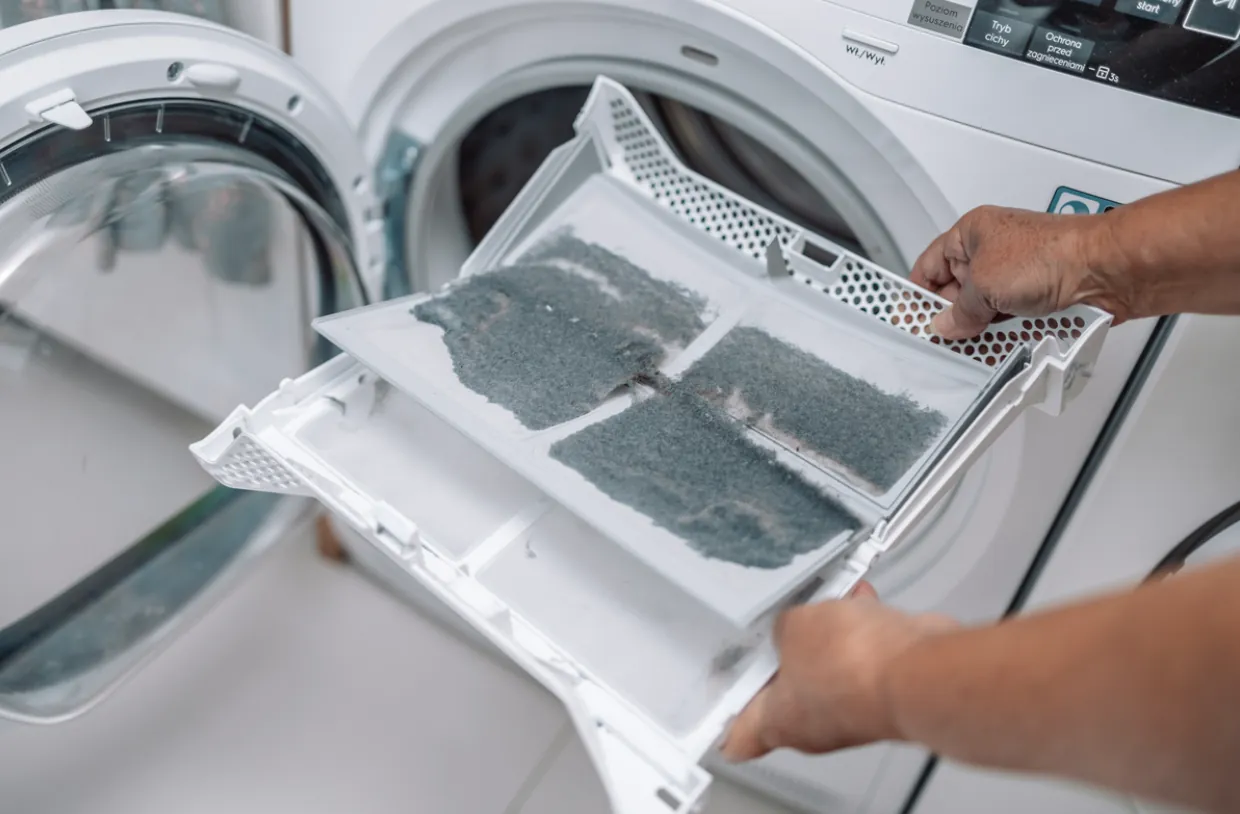
Lint is made of clothing fibers, cotton, polyester, and synthetic blends, released from fabric every time it tumbles in heat. It's lightweight, highly flammable, and collects in every section of your dryer's exhaust path that experiences reduced airflow or temperature change. Most homeowners manage only the lint trap screen, and assume that covers it. It doesn't. The screen catches roughly 75% of generated lint. The remaining 25% travels deeper into the system, where no consumer tool reaches without disassembly. In Los Angeles homes, where mild year-round weather encourages frequent laundry use and many properties have long or multi-bend vent runs, that 25% accumulates into a real fire hazard faster than most homeowners realize.
- ⚠ Lint trap housing: lint bypasses the screen and coats the interior cavity walls
- ⚠ Transition hose interior: fibrous lint clings to corrugated surfaces and compresses under heat
- ⚠ Exhaust duct bends: each 90-degree turn creates a low-velocity zone where lint settles and packs
- ⚠ Drum felt seal: lint and debris lodge in the gap between the drum and the front panel
- ⚠ Exterior vent cap: lint compresses into a dense mat at the termination flap, sometimes blocking it completely
- ⚠ Behind the dryer: loose lint accumulates on the floor, wall, and hose exterior, creating an ignition-ready environment
The Solution
Professional Lint Removal, Every Accumulation Point, Not Just the Duct
Our dryer lint removal service covers the complete exhaust system, lint trap housing, transition hose interior, full duct length, and exterior vent cap, using professional rotary brush equipment and high-powered vacuum extraction. Unlike a standard lint remover brush for dryer that a homeowner inserts from one end, our flexible rotary tools travel the full duct length and agitate every surface, including inside bends and compressed sections. Lint is extracted in real time, not pushed toward the exterior where it re-packs. Every service is confirmed with before-and-after airflow measurement.
Get Free Estimate →Benefits
Why Homeowners Choose Professional Lint Removal
Eliminates the Fire Hazard at Every Source Point
Lint is extremely flammable, and professional removal clears it from every accumulation point not just the visible screen eliminating the ignition risk consumer cleaning leaves behind. High-use households can keep that risk managed with scheduled fire-prevention vent cleaning.
Restores Full Dryer Efficiency in One Visit
A dryer forcing air through lint-packed bends and a compressed exterior cap runs hotter and longer than necessary. Clearing every accumulation point restores designed airflow capacity, clothes dry completely in a single cycle.
Reaches Where Consumer Tools Can't
A lint remover brush for dryer or consumer vacuum attachment cleans the accessible first section of the duct. Professional rotary equipment reaches every bend, mid-duct section, and the housing cavity that determines whether your dryer is actually safe.
Zero Mess, Guaranteed
High-powered vacuum extraction captures all dislodged lint at the source throughout the entire process. Your laundry room, and the wall, floor, and area behind the dryer, is left clean.
Our Process
What to Expect, Step by Step
Full System Inspection & Pre-Service Airflow Reading
We begin by pulling the dryer away from the wall to inspect the transition hose, the connection point, the floor area for lint accumulation, and the accessible duct section. An airflow meter measures exhaust volume at the exterior vent cap, establishing the baseline the service will be measured against.
Lint Trap Housing & Transition Hose Cleaning
The lint trap housing cavity is vacuumed using a narrow attachment that reaches inside the housing walls, not just the screen slot. The transition hose is inspected, disconnected if needed, and cleared of any lint accumulation on its interior surfaces before reconnection.
Full-Length Rotary Brush Agitation & Vacuum Extraction
Flexible rotary brush equipment travels the complete length of the exhaust duct, agitating lint from duct walls, inside every bend, and at the compressed sections near the exterior. High-powered vacuum extraction removes everything simultaneously as it's dislodged. Nothing is pushed toward the exterior cap to re-pack.
Exterior Cap Cleaning & Post-Service Airflow Confirmation
The exterior vent cap is removed, cleaned of compacted lint from the flap and housing, and reinstalled. A second airflow measurement confirms the improvement. The dryer is reconnected and run briefly to verify correct exhaust operation before we leave.
What It Means
Professional Dryer Lint Removal, What It Actually Covers
Dryer lint removal addresses something general dryer vent cleaning often understates: lint doesn't just collect in the duct. It accumulates in multiple distinct locations across the dryer's exhaust system each with different access requirements and different levels of fire risk. Knowing where lint collects, and why, explains why consumer tools treat the symptom rather than the source.
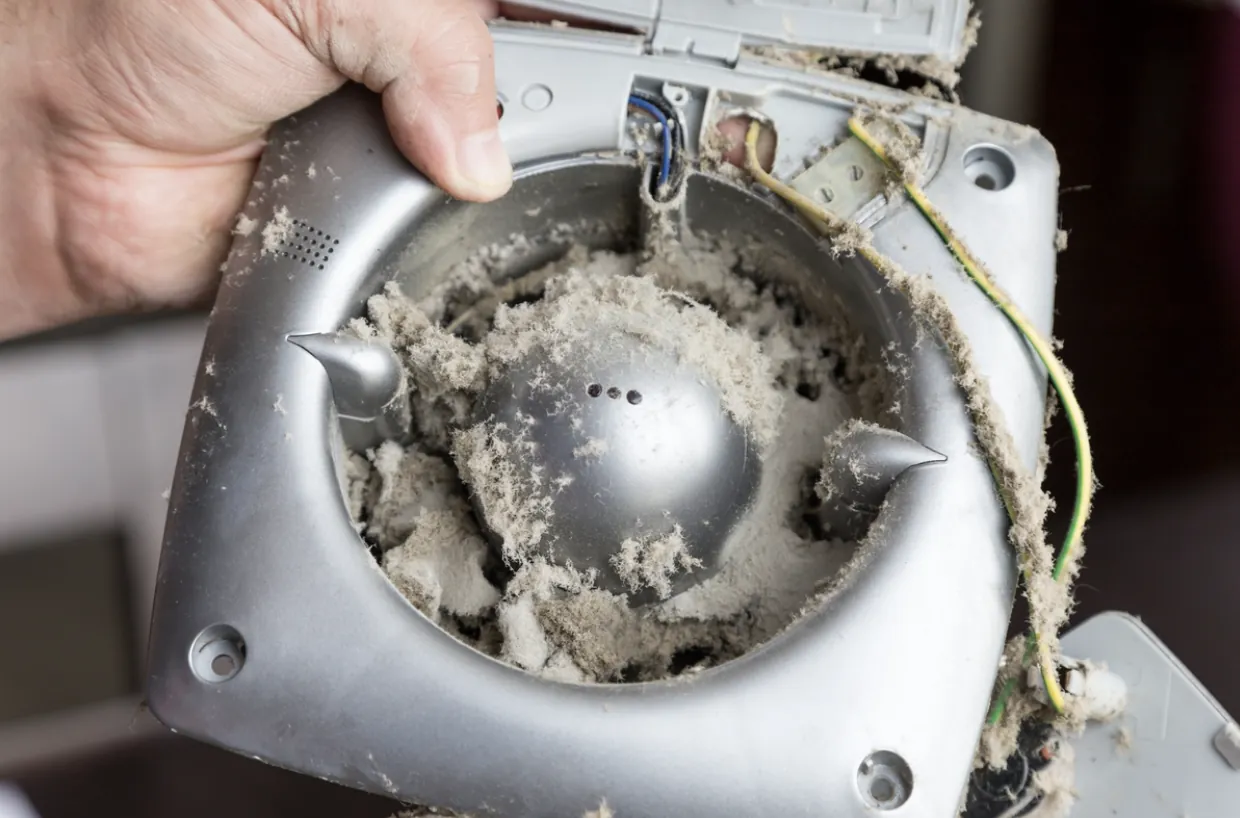
The lint trap housing is where the problem most often begins. Every homeowner cleans the screen, but the housing cavity it sits in is almost never addressed. Fine lint slips past the screen edges and coats the cavity walls, narrowing the dryer's first exhaust point a restriction that pushes lint faster through later sections and accelerates buildup at every bend downstream. Professional housing cleaning removes what the screen never caught.
The transition hose the connector between the exhaust port and the wall duct is the second primary accumulation zone. Consumer brushes inserted from the exterior cap rarely reach mid-duct bends and often push lint into the hose rather than extracting it. Lint remover balls reduce static and the volume of new lint entering the duct, but do nothing for lint already inside. Clearing it takes tools that travel toward the dryer with simultaneous extraction.
LA's housing stock adds its own challenge: many older homes have laundry rooms set far from exterior walls, producing long runs with multiple bends. Each 90-degree turn creates a low-pressure zone where lint settles, compresses under heat, and can form a partial or complete blockage. Professional lint removal addresses each of those bends specifically not just the sections reachable from either end.
Warning Signs
Signs Your Dryer Has More Lint Buildup Than You Think
Tap any sign to learn what it means and what to do next.
! The lint screen looks clean but drying takes two cycles ⌄
A clean-looking lint screen doesn't mean the system is clear. If the screen appears relatively clean but drying performance has declined, lint has accumulated inside the housing cavity and deeper in the duct, precisely where the screen can't show it and consumer tools don't reach.
! Burning smell that appears during or after a drying cycle ⌄
Lint accumulating near the heating element or inside a hot, restricted duct section releases a scorched-fiber smell when it reaches high enough temperatures. This is not a minor odor warning, it's a direct indicator that lint is present in a location where ignition temperature is being approached. Stop the dryer immediately.
! Lint accumulating around the dryer door seal ⌄
Visible lint around the drum door opening or on the front panel indicates the felt drum seal is allowing lint to escape the drum interior. This lint doesn't reach the screen, it accumulates around the dryer's external surfaces and behind the appliance, where it sits against the heating element housing.
! Exterior vent flap stays closed or barely opens when running ⌄
The cap flap should open fully when the dryer runs. If it stays nearly closed, the duct and cap are packed with compacted lint choking exhaust flow to a fraction of designed output a high-risk condition that calls for dryer vent blockage removal before the dryer is used again.
! Clothes come out hotter than usual at the end of a cycle ⌄
When the duct can't exhaust heat efficiently, it recirculates through the drum. Clothes that feel unusually hot at cycle end, not just warm, are being repeatedly heated rather than dried. The dryer's thermal overload protection is compensating for heat that can't escape.
! You've used a consumer lint brush and performance didn't improve ⌄
A lint remover brush for dryer inserted from the exterior can clear the last 2 to 3 feet of duct near the cap. If performance didn't improve noticeably after consumer-tool cleaning, the primary accumulation is deeper in the system, at mid-duct bends, inside the transition hose, or in the lint trap housing, where those tools don't reach.
Deep Dive
Everything You Should Know About Dryer Lint
Warning Signs
The Warning Signs That Mean Lint Has Built Up Past the Point a DIY Tool Can Address
Consumer lint removal tools, flexible brush kits, vacuum attachments, and lint remover dryer vents products, serve a legitimate maintenance role for light, accessible accumulation. A homeowner who uses them regularly after every few loads can keep the first section of the duct relatively clear. But they have a fixed physical limitation: they cannot navigate 90-degree bends inside the duct wall, they cannot reach mid-duct sections in longer runs, and they cannot access the lint trap housing cavity. When performance symptoms persist after consumer-tool cleaning, extended drying times, lingering heat, a burning smell that appears intermittently, it means the accumulation is in a section those tools physically cannot reach. At that point, the warning signs aren't about how often you've been cleaning. They're about where the lint is, and whether the tools you've been using can get there.
Key Points
- ✓ Drying times extended despite regular lint screen clearing
- ✓ Burning smell persisting after consumer-tool cleaning attempt
- ✓ Lint visible around dryer door seal or on the front panel exterior
- ✓ Exterior vent flap not fully opening during dryer operation
- ✓ Clothes hotter than normal at the end of a standard cycle
- ✓ Consumer lint remover brush for dryer used, but no airflow improvement
Benefits
The Real Benefits of Reaching Every Lint Accumulation Point
The difference between a surface lint cleaning and a complete professional lint removal service is measurable in airflow performance, and in fire risk reduction. A consumer lint remover brush for dryer inserted from the exterior cap typically clears 2 to 4 feet of duct and pushes loosened lint inward rather than extracting it. Lint remover balls for dryer help reduce the volume of lint entering the duct by reducing static charge during tumbling, but they have zero effect on lint already packed inside the housing cavity, transition hose, or mid-duct bends. Professional rotary brush equipment travels the complete duct length with simultaneous vacuum extraction, pulling lint out rather than redistributing it. The lint trap housing cavity is vacuumed with a specialized narrow attachment that reaches the surfaces the screen slot doesn't expose. The exterior cap is disassembled and manually cleared of compressed lint from the flap mechanism. Each of these steps addresses a specific accumulation point that consumer tools skip, and each one represents a reduction in fire risk and a measurable improvement in exhaust airflow.
Key Points
- ✓ Clears lint trap housing cavity, the accumulation point behind the screen
- ✓ Reaches mid-duct bends inaccessible to consumer lint remover brush for dryer tools
- ✓ Extracts lint rather than pushing it deeper or toward the exterior
- ✓ Disassembles and clears compacted lint from the exterior vent cap mechanism
- ✓ Addresses transition hose interior, the first compression zone in the exhaust path
- ✓ Confirmed with before-and-after airflow measurement, not assumed improvement
Maintenance
How to Manage Lint Between Professional Removal Services
Professional lint removal every 12 months is the baseline, but between-service habits directly determine how much accumulation builds up and how quickly the system returns to a restricted state. Clearing the lint screen before every load, not after, is the single most impactful daily habit. A screen loaded with lint from the previous cycle restricts airflow from the first minute of the next run, accelerating the velocity of lint particles that bypass the screen edges into the housing cavity. Lint remover balls for dryer are a legitimate between-service tool: they reduce static charge during tumbling, which causes lint fibers to separate and collect on the screen rather than clumping and bypassing it. They won't remove lint already inside the duct, but they reduce the rate at which new lint enters it. For homeowners who want to maintain duct accessibility between annual professional visits, a flexible lint remover brush for dryer used from the exterior cap quarterly can keep the last few feet of duct relatively clear, but should never substitute for full-system professional service. In Los Angeles properties with roof-terminated dryer vents, common in many multi-story homes and condos in West Hollywood, Koreatown, and Culver City, pest-resistant vent caps are essential, as bird nesting inside the cap creates sudden complete blockages that no brush-from-outside approach can clear safely.
Key Points
- ✓ Clear the lint screen before every load, not after the previous one
- ✓ Use lint remover balls for dryer to reduce static and improve screen capture rate
- ✓ Clean the lint screen mesh with water monthly, fabric softener coating reduces filtration
- ✓ Use a consumer lint remover brush for dryer from the cap quarterly for accessible sections
- ✓ Check the exterior vent flap opens fully when the dryer is running
- ✓ Schedule professional full-system lint removal annually, every 6 months for high-use households
What's Included
A Complete Service, No Add-On Surprises
Every dryer lint removal service covers the complete system, from the lint trap housing through the full duct length to the exterior cap. One flat rate, confirmed before we start. No fees added for duct length, access difficulty, or what we find inside.
- ✓ Pre-service visual inspection, dryer, transition hose & exterior cap
- ✓ Pre-service airflow measurement at exterior termination
- ✓ Lint trap housing cavity vacuum cleaning
- ✓ Transition hose inspection & interior lint removal
- ✓ Full-length rotary brush agitation, all duct sections and bends
- ✓ High-powered vacuum extraction throughout, real-time lint capture
- ✓ Exterior vent cap removal, disassembly & compressed lint clearing
- ✓ Behind-dryer area cleanup, floor and wall lint accumulation
- ✓ Dryer reconnection & operational test
- ✓ Post-service airflow measurement & written service record
15+ Years Serving Southern California Homeowners
Our Promise
You'll Always Know What You're Paying, Before We Start
No estimates that change once we've pulled the dryer out. No fees added for what we find inside. You receive a flat-rate written estimate, a documented pre-service airflow reading, and a written service record after completion. If measurable airflow improvement isn't confirmed by the post-service reading, we continue until it is, at no additional charge.
Certified Technicians
Every dryer lint removal service is performed by a trained, certified professional using commercial-grade rotary brush and vacuum equipment, not consumer-grade tools on a professional job.
Written Estimates & Airflow Records
You see the full price before we begin. You receive documented before-and-after airflow readings when we finish, a clear service record for your home files.
Same-Day Scheduling
Appointments available across Los Angeles, Burbank, Glendale, Pasadena, Santa Monica, and the San Fernando Valley, with same-day availability for urgent situations.
Satisfaction Guarantee
Every service is backed by our satisfaction guarantee. If the post-service airflow measurement doesn't confirm improvement, we return to complete the job, at no charge.
FAQs
Quick answers from our techs.
Still have a question? Call us, we answer the phone, day or night.
Call (888) 280-2285 →What's the difference between cleaning the lint screen and professional dryer lint removal?
The lint screen captures approximately 75% of lint generated during a drying cycle. Professional dryer lint removal services clear the remaining 25% that bypasses the screen, from the lint trap housing cavity, the transition hose interior, mid-duct sections, and the exterior cap. These are the accumulation points that create fire risk and airflow restriction, and none of them are accessible with a standard lint screen cleaning.
Do lint remover balls for dryer eliminate the need for professional service?
No. Lint remover balls for dryer reduce static charge during tumbling, which helps lint fibers collect on the screen rather than bypassing it. They reduce the rate at which lint enters the duct between services, which is useful, but they have no effect on lint already accumulated inside the housing cavity, transition hose, or exhaust duct. Professional removal is still required annually.
Can a lint remover brush for dryer replace professional service?
A consumer lint remover brush for dryer is useful for maintaining the last 2 to 4 feet of duct accessible from the exterior cap between annual professional services. It cannot navigate 90-degree bends inside the duct wall, cannot reach mid-duct accumulation points, and cannot clear the lint trap housing cavity. For light, accessible buildup between services, yes. As a substitute for full-system professional lint removal, no.
How do I know if my dryer has lint buildup beyond the screen?
The clearest indicators are: drying times that have gradually extended despite regular screen cleaning, a burning smell that appears intermittently during cycles, a lint screen that looks relatively clean but performance is still poor, and an exterior vent flap that doesn't open fully when the dryer is running. Any of these signals means the accumulation is inside the system, not on the screen.
How often should professional dryer lint removal be scheduled?
Annual service is the NFPA-recommended minimum for residential dryers. Households doing five or more loads per week, homes with pets, or properties with long or multi-bend vent runs should consider service every six months. If you've never had a professional service and the dryer has been in use for two or more years, start with a full-system lint removal regardless of apparent performance.
Service Areas
Air Duct & Chimney Services Across Los Angeles County
SoCal Green Air Duct & Chimney provides air duct cleaning, chimney sweeping, dryer vent cleaning, and indoor air quality services throughout Los Angeles County. Our certified technicians serve residential and commercial properties across these communities and beyond.
Ready to Clear Every Accumulation Point, Not Just the Screen?
Book professional dryer lint removal services today. Full-system clearing, documented airflow improvement, and flat-rate pricing, confirmed before we start. Most appointments across Los Angeles and Southern California are available within 48 hours.