Residential Ventilation Services
Ventilation Service Los Angeles
Most Los Angeles homes have a ventilation problem they don't know about. California's energy-efficient building standards create tightly sealed homes that conserve energy and trap everything inside, stale indoor air, CO2, moisture, VOCs, cooking odors, and combustion byproducts from gas appliances. Without proper residential ventilation services, these contaminants accumulate continuously with every occupied hour. Our certified technicians provide complete ventilation service for Los Angeles homes, inspecting your current system, measuring actual airflow performance, and recommending targeted indoor airflow solutions that improve air circulation, reduce pollutant concentration, and restore the fresh air exchange your home needs. Written estimates. Flat-rate pricing. Same-day scheduling.
The Problem
Why Poor Airflow Is a Year-Round Problem in Los Angeles Homes
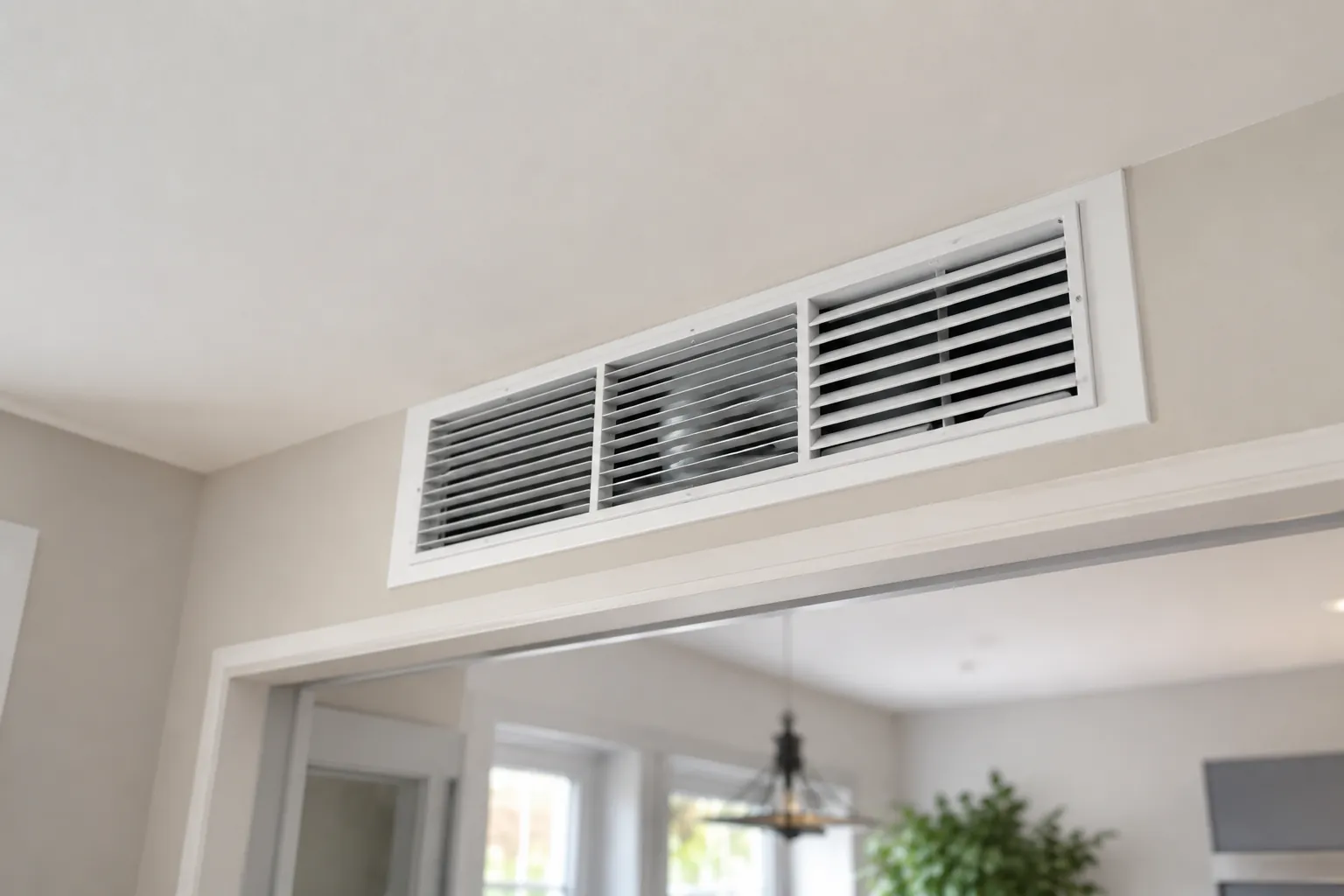
California's Title 24 energy code has progressively tightened building envelope requirements over the past two decades, reducing air leakage, improving insulation, and raising energy performance standards across residential construction. The side effect is homes that exchange far less air with the outdoors than older construction did. Without intentional mechanical ventilation to replace what infiltration used to provide, indoor air stagnates. CO2 concentrations rise with occupancy. VOCs from flooring, furniture, and cleaning products accumulate. Cooking exhaust recirculates through inadequately sized range hood systems. And in bathrooms and laundry areas across coastal neighborhoods from Santa Monica through the South Bay, inadequate exhaust ventilation allows moisture to accumulate, creating the humidity conditions that mold requires. Los Angeles homes compound this problem seasonally: wildfire smoke events make opening windows for natural ventilation impossible for days or weeks at a time, and the region's year-round mild climate means homes are often kept closed for extended periods that create persistent indoor air stagnation.
- ⚠ Stale indoor air from insufficient fresh air exchange in tightly sealed homes
- ⚠ CO2 buildup in occupied rooms, reduces cognitive performance and causes fatigue
- ⚠ Moisture accumulation from inadequate exhaust ventilation in bathrooms and kitchens
- ⚠ VOCs and combustion byproducts trapped without dilution from fresh outdoor air
- ⚠ Uneven airflow, some rooms over-pressured, others starved, creating comfort and air quality disparity
- ⚠ Attic airflow failure, attic temperatures exceeding 120°F drive radiant heat into living spaces and accelerate roof deterioration
The Solution
Ventilation System Inspection First, Targeted Upgrades Based on Actual Performance
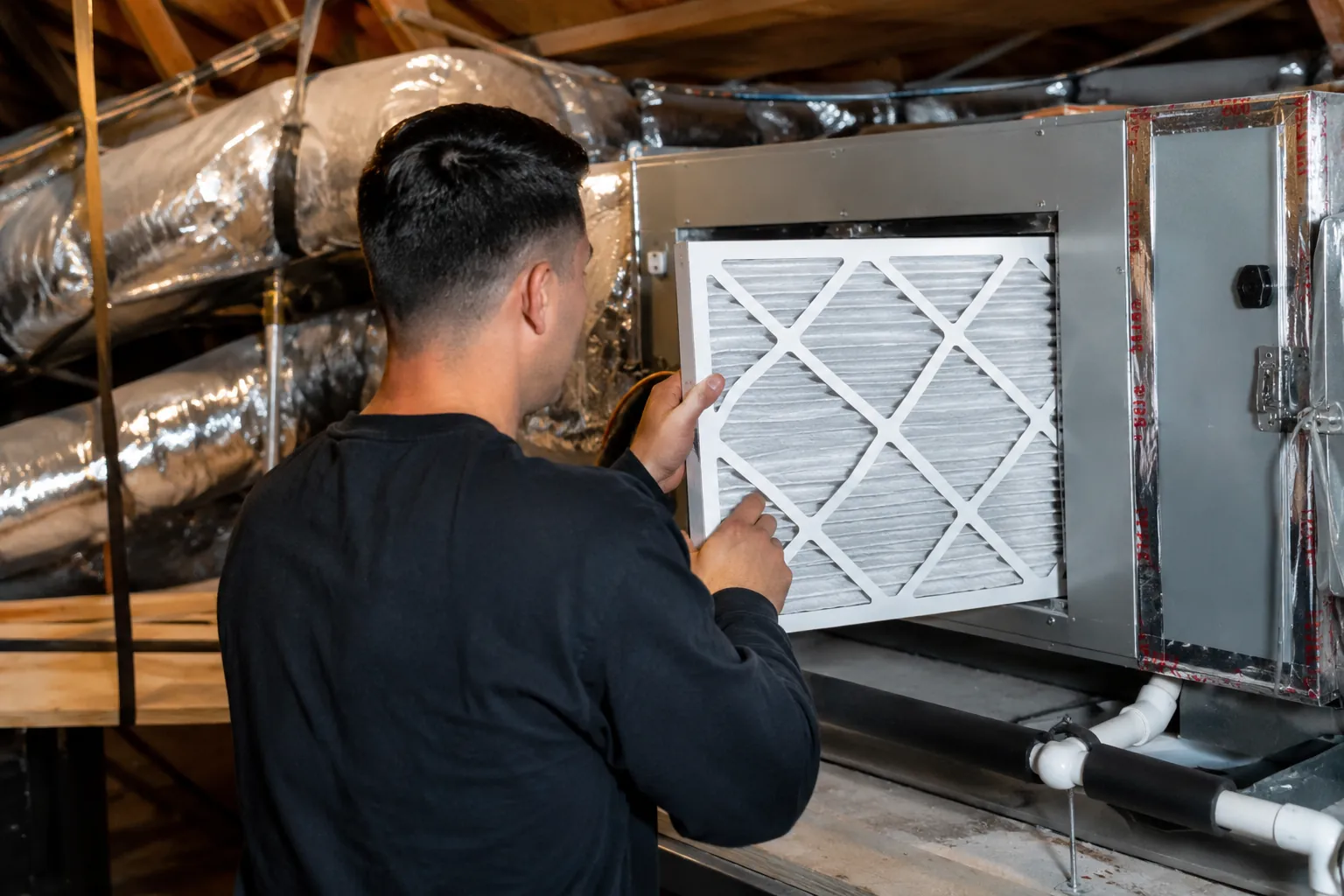
Effective home ventilation services start with measuring what's actually happening, not assuming which component needs replacement. Our certified technicians inspect the complete ventilation system: whole-home mechanical ventilation, bathroom and kitchen exhaust ventilation, roof and attic airflow, and ductwork condition as it affects air distribution. Airflow is measured at every register and exhaust point using calibrated instrumentation. The inspection produces a written airflow assessment that identifies where ventilation is inadequate, where it's blocked, and where upgrades will deliver measurable improvement. Every recommendation is based on what we measured, not what's easiest to install.
Get Free Estimate →Benefits
Why Homeowners Choose Professional Ventilation Service
Measurably Better Indoor Air Circulation
Proper fresh air ventilation continuously dilutes indoor-generated pollutants, CO2, VOCs, cooking odors, and moisture, by replacing stale indoor air with controlled outdoor air. The improvement is measurable in CO2 concentration, humidity levels, and occupant comfort.
Humidity Control That Prevents Mold
Adequate exhaust ventilation removes moisture from kitchens, bathrooms, and laundry areas before it can accumulate on surfaces. Proper humidity control is the single most effective mold prevention measure available to homeowners.
Lower HVAC Energy Consumption
Balanced airflow means your HVAC system isn't fighting pressure imbalances to condition air in rooms receiving inadequate supply. Energy-efficient ventilation that distributes airflow correctly reduces how hard the system works, and what it costs to operate.
Wildfire Smoke Protection Through Controlled Ventilation
A properly designed mechanical ventilation system with filtration provides controlled fresh air exchange during wildfire smoke events, protecting indoor air quality without opening windows that would allow smoke infiltration. Paired with whole-home air purification, the system both brings in filtered fresh air and continuously cleans what's already circulating indoors.
Our Process
What to Expect, Step by Step
1, Inspection & Airflow Measurement
We trace the whole-home ventilation path, locate every exhaust fan and measure its actual output against rated performance, check roof and attic airflow, and review the ductwork for restrictions, disconnections, and leaks. Airflow is measured at every register, return, and exhaust point with calibrated tools, not estimated from equipment specs.
2, Assessment & Written Findings
We compare those readings to ASHRAE 62.2 whole-home rates, Title 24 exhaust minimums, and equipment specs. Rooms with poor airflow, underperforming fans, and balancing needs are all documented, and you get the findings in writing before we recommend any upgrade.
3, Targeted Upgrades
We fix only what the assessment flagged. That may mean replacing exhaust fans, integrating fresh air into your HVAC, clearing restricted duct paths, balancing airflow with damper adjustments, correcting attic ventilation, or installing an ERV/HRV for whole-home fresh air with energy recovery.
4, Verification & Documentation
After the work, we re-measure every point that was deficient to confirm the improvement. You receive written before-and-after airflow readings and a full service record, suitable for Title 24 documentation where it applies.
What It Means
Residential Ventilation Services, What's Covered and Why Each Component Matters
Residential ventilation covers three connected systems that together set your home's air quality, humidity, and comfort. Whole-home mechanical ventilation continuously exchanges indoor and outdoor air to dilute pollutants. Local exhaust, bathroom fans, range hoods, laundry exhaust, removes moisture, odors, and combustion byproducts at the source. Roof and attic airflow manages the heat and moisture affecting both HVAC efficiency and roof life. A complete service addresses all three, since a weakness in one undermines the others.
Whole-home ventilation is the system most often missing in LA homes. Many older homes don't meet ASHRAE 62.2 minimum rates, so indoor CO2 climbs above outdoor levels during occupied hours, linked to fatigue and poor sleep. An HVAC fresh-air intake or ERV closes that gap without hurting energy performance.
Local exhaust is where moisture problems begin. Many LA fans are undersized or vent into the attic, where they relocate moisture rather than remove it, driving wood rot and mold. Inspecting, clearing, and reconnecting these duct paths fixes it directly.
Roof ventilation ties to cooling cost and roof longevity. Inadequate attic airflow pushes temperatures past 120°F, radiating heat into living spaces. An assessment confirms whether attic intake and exhaust are sufficient and balanced.
Warning Signs
Signs Your Home Has a Ventilation Problem
Tap any sign to learn what it means and what to do next.
! Stuffy or stale-smelling air, especially in bedrooms or home offices ⌄
Persistent stuffiness in rooms with closed doors is a direct indicator of CO2 accumulation from occupant breathing without adequate fresh air exchange. This is not an HVAC problem, the system may be conditioning the air correctly while the same stale air recirculates without any outdoor air introduction.
! Condensation on windows, walls, or bathroom surfaces ⌄
Visible condensation on interior surfaces is evidence that indoor moisture levels are exceeding the dew point of those surfaces, a reliable indicator that exhaust ventilation is not removing moisture-laden air from bathrooms, kitchens, or laundry areas at sufficient rates. Persistent surface condensation is the precursor to mold growth.
! Mold recurring in bathrooms despite regular cleaning ⌄
Mold that returns within weeks of cleaning is not a cleaning problem, it is a ventilation failure. The exhaust fan is either too small, too slow, poorly ducted, or venting into the attic rather than outside. Until the exhaust ventilation deficiency is corrected, mold will continue to establish on every surface where moisture concentrates.
! Cooking odors that linger for hours throughout the home ⌄
Cooking odors that persist long after cooking has ended indicate that kitchen exhaust ventilation is insufficient to capture and remove combustion byproducts, grease particles, and moisture at their source. Recirculating range hoods that filter and return air to the kitchen without ducting it outside are the most common cause, they remove visible grease but not moisture, CO2, or combustion gases.
! Rooms that are consistently hotter or colder than others ⌄
Rooms significantly warmer or cooler than adjacent spaces on the same HVAC zone indicate an airflow balancing problem, supply airflow is not distributed proportionally to each room's thermal load. The HVAC system may be correctly sized while poor airflow distribution creates comfort disparities that thermostat adjustments cannot resolve.
! Excessive dust accumulation or allergy symptoms despite air filtration ⌄
If dust reaccumulates quickly on surfaces despite regular HVAC filter replacement, or if allergy symptoms persist in a home with adequate air filtration, the ventilation system may be drawing air from an unfiltered source, attic gaps, crawlspace infiltration, or unsealed ductwork connections that bypass the filtration media entirely.
Deep Dive
Everything You Should Know About Home Ventilation Services
Warning Signs
The Warning Signs That Mean Your Ventilation System Needs Professional Assessment
Poor ventilation rarely shows up as one obvious failure. It shows up as a cluster, stuffiness in occupied rooms, bathroom mold that returns after cleaning, cooking smells that linger for hours, rooms the HVAC never makes comfortable, that seem unrelated but point to one root cause: the home isn't moving air correctly. These aren't comfort preferences but measurable conditions, and indoor air quality testing puts numbers to them: CO2 above 1,000 ppm degrades sleep, and humidity over 60% drives mold and respiratory issues. Professional ventilation service identifies these through measurement, not a visual check of equipment that looks fine but isn't performing.
Key Points
- ✓ Persistent stuffiness or CO2 symptoms in occupied rooms, headaches, fatigue, difficulty concentrating
- ✓ Condensation on windows, walls, or ceilings, exhaust ventilation failure
- ✓ Recurring mold in bathrooms despite regular cleaning, moisture not being removed at source
- ✓ Cooking or pet odors persisting for extended periods, inadequate local exhaust
- ✓ Rooms with consistent temperature disparity on the same HVAC zone, airflow balancing needed
- ✓ Dust or allergen accumulation despite adequate filtration, unfiltered infiltration pathways
Benefits
The Full Case for Investing in Proper Residential Ventilation
Better airflow pays off across health, comfort, structural protection, and energy efficiency at once, because ventilation affects all four directly. On health, fresh air ventilation dilutes every indoor-generated pollutant: CO2 from breathing, VOCs from materials and products, combustion byproducts from gas appliances, and contaminants from mold activity. None dilute on their own, they accumulate until mechanical air exchange replaces them. On comfort, airflow balancing fixes the temperature and humidity disparities that thermostat changes can't, by giving every room the supply it needs. On structure, proper exhaust ventilation removes the moisture behind attic wood rot, wall-cavity mold, and bathroom paint failure. On energy, ERV and HRV systems recover heat or cooling from exhaust air, delivering fresh air without the penalty of dumping conditioned air. In Los Angeles, where HVAC runs year-round, those savings add up significantly over years of ownership.
Key Points
- ✓ Continuous indoor pollutant reduction through controlled fresh air exchange
- ✓ Humidity control that prevents mold establishment and structural moisture damage
- ✓ Airflow balancing that resolves room temperature and comfort disparities
- ✓ Energy-efficient ventilation with heat or energy recovery reduces HVAC operating cost
- ✓ Indoor air circulation improvement reduces allergen and VOC concentration throughout the home
- ✓ Written airflow documentation supports California Title 24 compliance and real estate disclosure
Maintenance
Ventilation Maintenance, What Keeps the System Performing Between Service Visits
Ventilation maintenance is the most consistently skipped category, because the parts are invisible (ductwork), rarely accessed (attic vents, exhaust paths), or assumed to be self-maintaining (exhaust fans). The most impactful habit is testing actual exhaust fan airflow yearly, not just checking that it turns on. A bathroom fan moving less than 50 CFM isn't removing moisture, no matter how long it runs. Quick check: hold a tissue to the grille, if it doesn't cling against the suction, the fan isn't performing. Clearing the exhaust duct path of lint, debris, and growth often restores that performance without replacing the fan, and it's the step most often overlooked. For roof ventilation, inspect soffit vents for insulation blockage and ridge or gable vents for debris each year to keep attic airflow balanced. For ERV or HRV systems, clean the core and replace filters annually to preserve the heat exchange efficiency that makes them worthwhile. And have mechanical ventilation duct paths inspected and cleared every three to five years, or after any renovation that may have introduced debris.
Key Points
- ✓ Test exhaust fan actual airflow annually, running doesn't mean performing
- ✓ Clear bathroom and kitchen exhaust duct paths through ventilation cleaning services every 3 to 5 years
- ✓ Inspect soffit vents for insulation blockage and ridge vents for debris, annually
- ✓ Clean ERV/HRV cores and replace filters per manufacturer schedule, typically annually
- ✓ Check whole-home mechanical ventilation intake for obstructions seasonally
- ✓ Schedule professional ventilation system inspection every 2 to 3 years or after renovation activity
What's Included
A Complete Ventilation Service, Assessed, Measured & Documented
Every residential ventilation service starts with inspection and airflow measurement, before any upgrade is recommended. One flat rate confirmed after assessment. No ventilation upgrades installed before you've seen the written findings and agreed on the scope.
- ✓ Whole-home ventilation system inspection, mechanical ventilation path, controls, and intake condition
- ✓ Exhaust ventilation assessment, bathroom fans, kitchen exhaust, and laundry ventilation
- ✓ Airflow measurement at all supply registers, returns, and exhaust terminations
- ✓ Roof ventilation service, attic airflow assessment, soffit and ridge vent inspection
- ✓ Ventilation duct cleaning services, exhaust duct path clearing and mechanical ventilation duct cleaning
- ✓ Airflow balancing, supply damper adjustment and register optimization
- ✓ Exhaust fan replacement, code-compliant sizing, proper exterior termination
- ✓ Fresh air ventilation integration, outdoor air intake with HVAC or dedicated ERV/HRV
- ✓ Ventilation upgrades, ERV/HRV installation for energy-efficient whole-home fresh air exchange
- ✓ Written before-and-after airflow measurements and service documentation
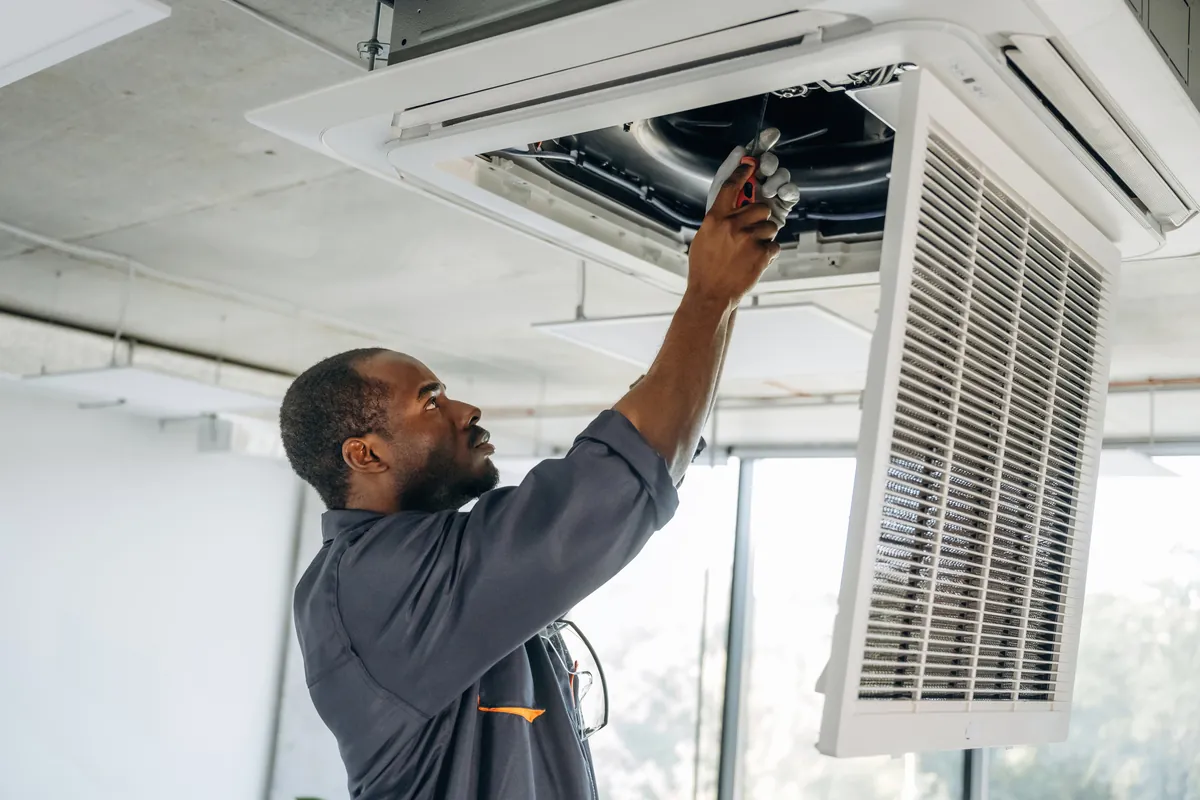
15+ Years Serving Southern California Homeowners
Our Promise
You'll Always Know What You're Paying, Before We Start
No ventilation upgrades recommended before the inspection findings are in writing. No scope that grows after we've accessed your system. You receive a written airflow assessment, a specific upgrade recommendation with cost, and post-service airflow measurement confirming the improvement. Every service is backed by our workmanship guarantee.
Certified Technicians
Every ventilation service is performed by a certified, insured professional trained in residential ventilation assessment, airflow measurement protocols, and California Title 24 ventilation requirements.
Measurement-Based Recommendations
We measure actual airflow performance before recommending any upgrade. Ventilation problems are identified by what the instrumentation shows, not by equipment age or visual inspection of components that appear functional.
Same-Day Scheduling
Ventilation inspection and upgrade appointments available across Los Angeles, Pasadena, Burbank, Glendale, Santa Monica, and the San Fernando Valley, with priority scheduling for moisture, mold, and health-related ventilation concerns.
Written Before-and-After Documentation
Every service produces written airflow measurements before and after, confirming the improvement is real and documented. Suitable for California Title 24 compliance records, real estate disclosure, and property management files.
FAQs
Quick answers from our techs.
Still have a question? Call us, we answer the phone, day or night.
Call (888) 280-2285 →What do residential ventilation services actually include?
A complete residential ventilation service covers inspection and airflow measurement of the whole-home mechanical ventilation system, all local exhaust fans and their duct paths, supply and return air distribution, and roof and attic airflow configuration. Based on measured findings, services can include exhaust fan replacement, fresh air ventilation integration, ventilation duct cleaning services to restore restricted duct paths, airflow balancing, roof ventilation service for attic airflow correction, and ERV or HRV installation for energy-efficient whole-home fresh air exchange.
What is roof ventilation service and why does it matter in Los Angeles?
Roof ventilation service is the inspection and correction of the airflow system that moves air through the attic, intake through soffit vents, exhaust through ridge or gable vents. In LA, where attic temperatures exceed 120°F during summer months, inadequate attic airflow increases cooling load, shortens roof material lifespan, and can allow moisture accumulation in coastal areas. California building code requires balanced attic ventilation at minimum ratios, many older LA homes fall significantly below this standard.
How do air ventilation cleaning services differ from duct cleaning?
Air ventilation cleaning services specifically address the exhaust duct paths from bathroom fans, kitchen range hoods, and mechanical ventilation systems, clearing lint, biological growth, and debris that restrict airflow through these dedicated ventilation paths. Duct cleaning addresses the HVAC supply and return duct system that distributes conditioned air. Both are needed but serve different system components. Ventilation duct cleaning services are the appropriate response when exhaust fan performance has declined despite the fan being mechanically functional.
Does my Los Angeles home need an ERV or HRV system?
Energy Recovery Ventilators (ERVs) and Heat Recovery Ventilators (HRVs) are the most effective indoor airflow solutions for homes that need continuous whole-home fresh air exchange without the energy penalty of exhausting conditioned air. ERVs, which also transfer moisture between incoming and outgoing air, are generally the appropriate choice for Southern California's dry climate, where the moisture transfer prevents incoming air from being excessively dry during winter operation. For homes meeting California Title 24 ventilation requirements and homeowners wanting to manage indoor air quality during wildfire smoke events without opening windows, an ERV with inline filtration is the most effective whole-home ventilation upgrade available.
How do I know if my bathroom exhaust fan is actually working?
A bathroom exhaust fan that runs without effectively removing moisture is one of the most common ventilation failures in Los Angeles homes. The simplest test: hold a single sheet of tissue against the grille while the fan runs. If the tissue doesn't cling firmly against the grille under the fan's suction, the fan is not producing adequate airflow, either from motor wear, a blocked duct path, or a disconnected exhaust termination. Professional ventilation service identifies which cause is responsible and whether duct clearing, fan replacement, or duct reconnection resolves the deficiency.
Service Areas
Air Duct & Chimney Services Across Los Angeles County
SoCal Green Air Duct & Chimney provides air duct cleaning, chimney sweeping, dryer vent cleaning, and indoor air quality services throughout Los Angeles County. Our certified technicians serve residential and commercial properties across these communities and beyond.
Ready to Find Out How Your Home's Ventilation Is Actually Performing?
Book a professional ventilation service assessment today. Measured airflow findings, written recommendations, and confirmed post-upgrade results, all based on what your home's system actually does, not what it's supposed to do. Most appointments across Los Angeles and Southern California are available within 48 hours.