Professional Duct Dust and Pet Hair Removal
Dust Removal From Air Ducts Los Angeles
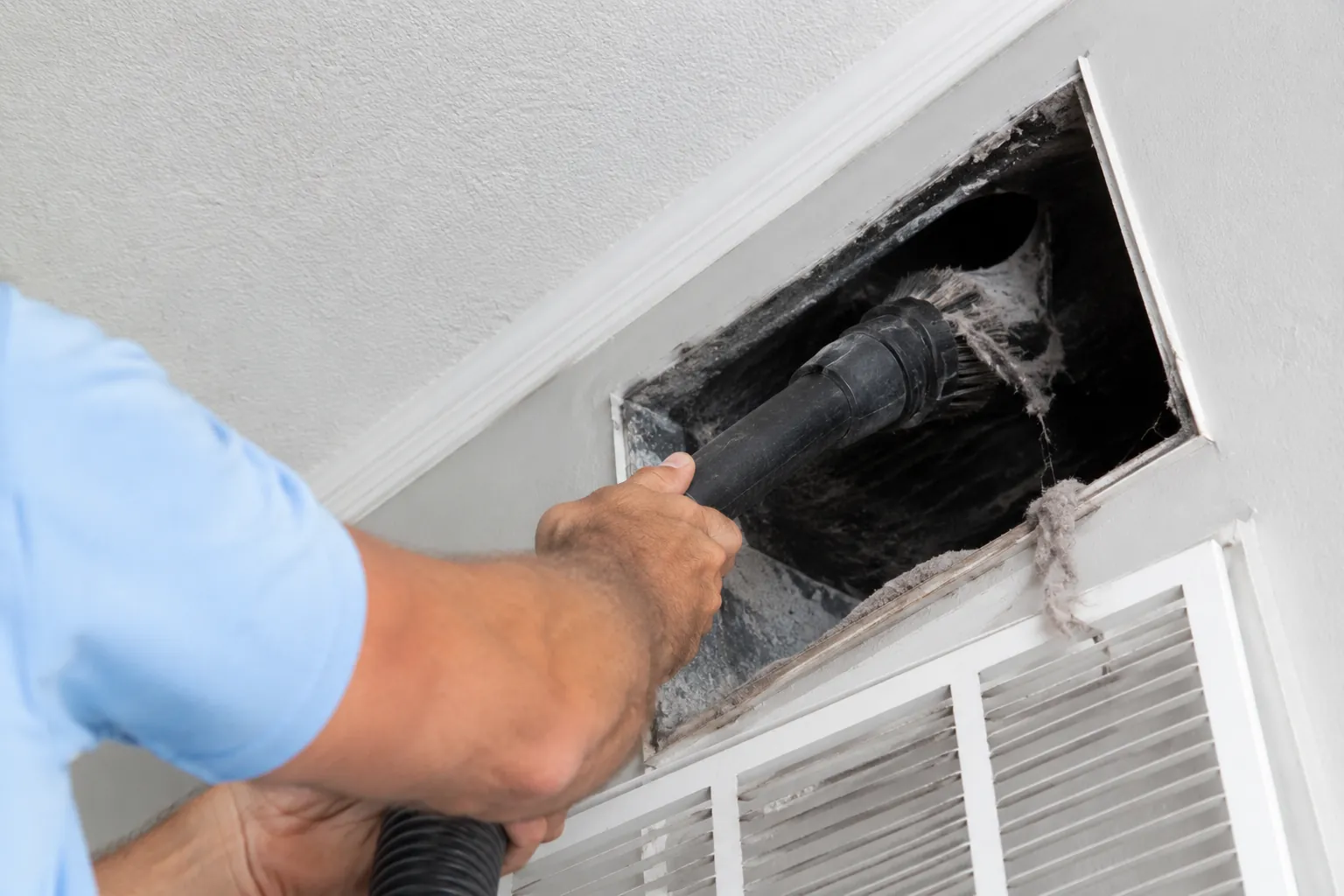
Dust and pet hair do not just collect at the register openings. They pack into duct bends, mat against flex duct walls, and coat every surface between the return grille and the air handler. Our certified technicians remove it all using commercial agitation tools and HEPA-filtered negative air extraction. No surface cleaning. No shortcuts. Complete removal from every section of the system. Flat-rate pricing and same-day scheduling across Los Angeles.
The Problem
Why Dust and Pet Hair Build Up Faster Than Most Homeowners Expect
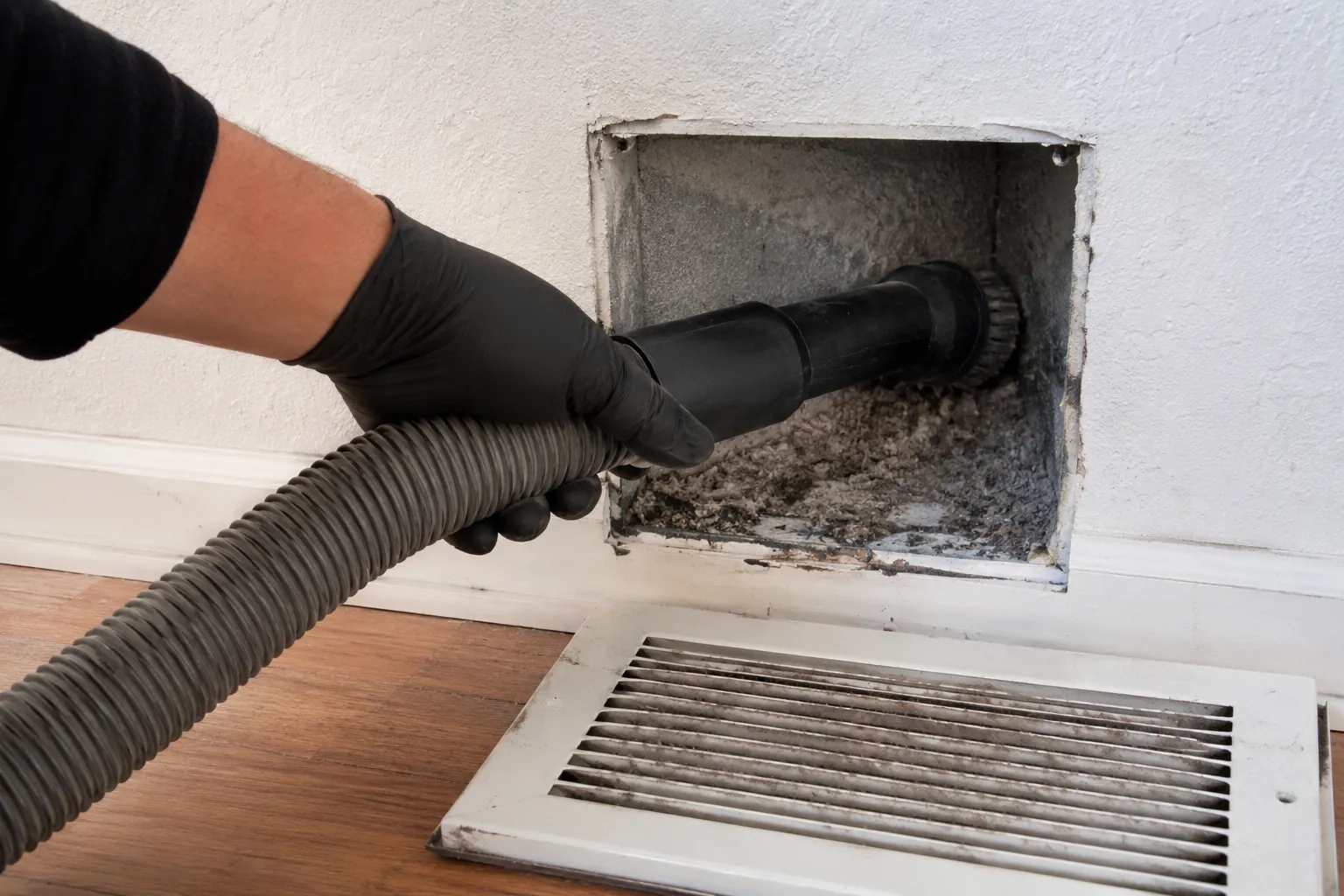
Every return vent in your home pulls air through whatever is floating near it: skin cells, fabric fibers, pollen, outdoor particulates, and in pet households, a constant supply of shed hair and dander. That material travels through the return grille, past the filter, and into the duct network. Whatever the filter does not capture settles on duct walls, particularly at bends, transitions, and any point where airflow velocity drops. Pet hair creates a specific problem that regular dust does not. A single strand of pet hair catches on a flex duct seam or a sheet metal fastener and becomes an anchor point. Other hairs and fibers collect around it. Within a few heating and cooling seasons, matted hair deposits form at every bend in the system, narrowing the effective airflow diameter of the duct run and trapping the dust and dander that settles on top of them. Los Angeles households face an added layer of particulate pressure. The LA basin consistently ranks among the most polluted air regions in the country. Fine outdoor particulates from vehicle exhaust, wildfire smoke, and industrial sources infiltrate homes through window gaps, door seals, and HVAC return air leaks. Once inside, they enter the duct system and settle alongside household dust and pet material. Homes in the San Fernando Valley and the eastern basin near the 710 and 405 corridors carry some of the highest indoor particulate loads in the region.
- ⚠ Pet hair matting at duct bends, transitions, and flex duct seams
- ⚠ Fine household dust settling on duct walls between every HVAC cycle
- ⚠ Pet dander embedding in duct liner surfaces and recirculating as allergen
- ⚠ Outdoor particulates and wildfire ash entering through return air infiltration points
The Solution
Complete Removal Using the Right Tools for Each Type of Debris
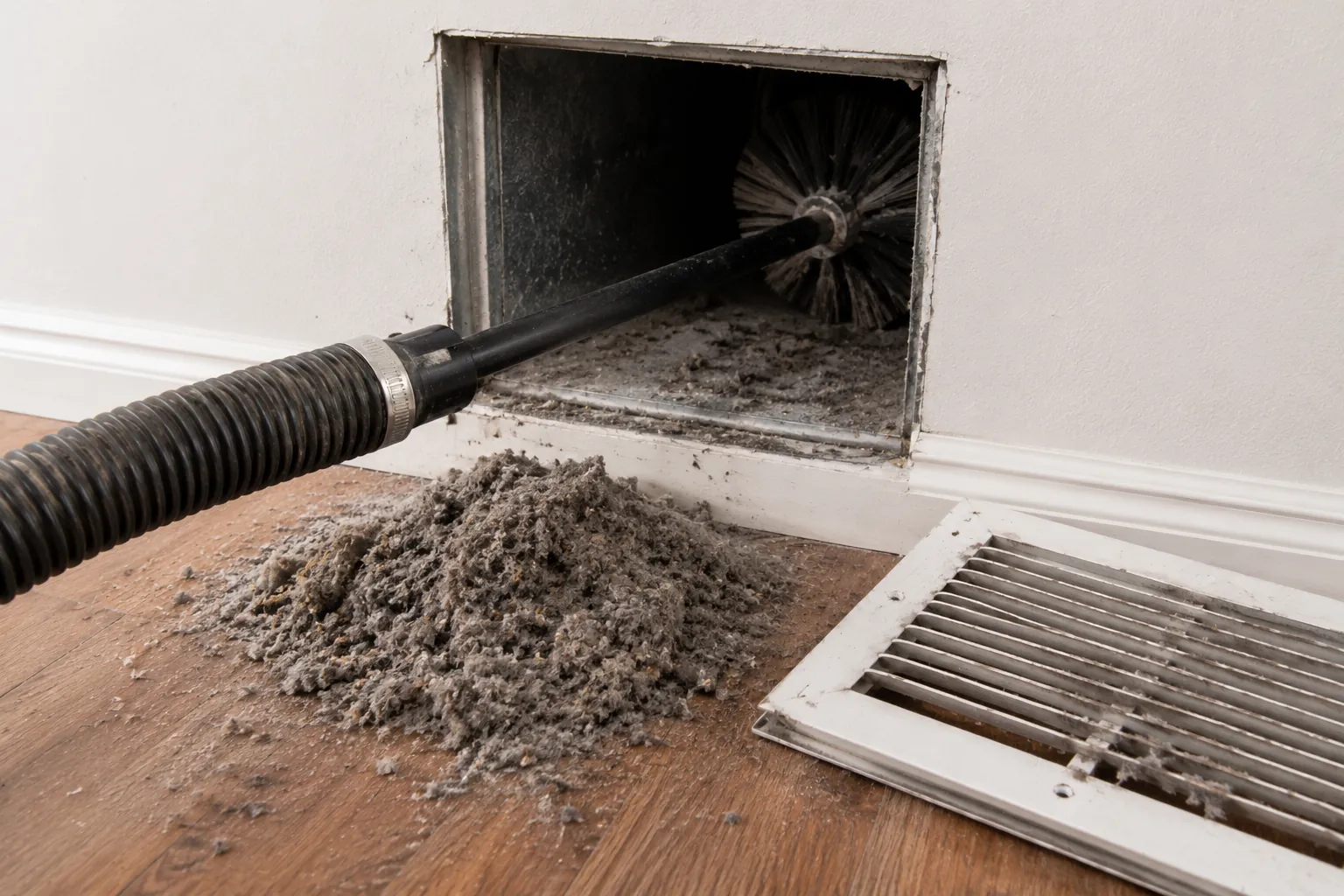
Dust removal from air ducts and pet hair removal from ducts require different approaches applied in the same service. Rotary agitation tools break up matted hair deposits at duct bends. Compressed air whips dislodge fine dust packed against flat duct surfaces. HEPA-filtered negative air machines maintain continuous extraction so that nothing dislodged during the process re-enters the living space. One visit clears both types of buildup from the full duct system.
Get Free Estimate →Why It Matters
What Pet and Dust Owners Get From a Proper Duct Cleaning
Pet Hair Fully Removed, Not Just Loosened
Matted hair deposits at duct bends require mechanical agitation to break up before extraction can work. Our rotary tools are selected specifically for this type of buildup so that extraction captures the full mat, not just the surface layer.
Dander Eliminated at the Source
Pet dander is a protein-based allergen that embeds in porous duct liner material. HEPA extraction removes both the surface accumulation and the loose material that the HVAC system would otherwise continue distributing. Airborne dander levels in the home drop measurably after service.
Airflow Restored to Full Capacity
Matted hair and packed dust in duct runs act as a restriction. Removing them restores the cross-section area the duct was designed to carry, which means better airflow, faster temperature recovery, and less strain on the air handler.
Surfaces Stay Cleaner Longer
When the duct system is the source of dust redistribution, cleaning flat surfaces in the home is a losing battle. Removing the source means the HVAC system stops redepositing material on furniture, shelves, and floors every time it cycles.
Our Process
What to Expect, Step by Step
System Inspection and Debris Assessment
We inspect all accessible return grilles, supply registers, and duct connections for buildup type and density. Pet hair matting at bends and transitions is mapped before tool selection so the right agitation equipment is used in each duct section.
Negative Air Containment Setup
HEPA negative air machines are connected to the duct trunk before agitation begins. The system is placed under negative pressure so that all dislodged dust, hair, and debris moves toward the collection unit rather than back into the living space.
Rotary Agitation and Hair Mat Removal
Commercial rotary brushes work through each supply and return run, breaking up matted hair deposits at bends and transitions. Compressed air whip tools follow to dislodge fine dust packed against duct wall surfaces that rotary tools cannot reach.
HEPA Extraction, Register Cleaning, and Airflow Verification
Negative air extraction captures all loosened material throughout the process. Each supply and return register is removed, cleaned individually, and reinstalled. Final airflow is checked at every register before we leave to confirm full delivery is restored.
What It Means
Dust Removal From Air Ducts: Why It Goes Further Than Filter Changes
Dust removal from air ducts is the direct extraction of accumulated particulate matter, fiber debris, and biological material from inside the duct distribution system. It is not the same as changing the air filter. The filter sits at the return air entry point and captures material before it enters the duct. It does not remove anything that is already on the duct walls from previous cycles, previous filter bypass events, or the period before a quality filter was installed.
The distinction matters practically. A household that upgrades to a MERV-13 filter today will have better particle capture from this point forward. It will not have cleaner duct walls. The material that settled during years of lower-efficiency filtration or no filtration remains inside the system until it is physically removed. Every HVAC cycle that pulls air across those walls re-suspends some portion of what has settled there.
Pet hair removal from ducts is a specific subset of this problem with its own mechanics. Pet hair in a duct system does not behave like fine dust. It does not stay uniformly distributed across surfaces. It aggregates. A single strand catches on a rough surface or a fastener edge and collects other strands around it. Over time, a matted pad forms at that location, narrowing the duct, trapping dander and dust in its fibers, and holding moisture in humid conditions. In households with multiple pets or high-shedding breeds, this process accelerates noticeably between service intervals.
In Los Angeles, where year-round mild temperatures mean pets do not experience sharp seasonal shedding cycles the way animals in colder climates do, hair enters the duct system throughout the year rather than in two concentrated seasonal surges. Homes in Burbank, Glendale, and Pasadena with year-round indoor pets and original duct systems from the 1980s or 1990s often have the most significant mat buildup because the duct material from that era has more surface texture for hair and debris to anchor to.
Warning Signs
Is Dust or Pet Hair Restricting Your Duct System?
Tap any sign to learn what it means and what to do next.
! Visible Hair or Debris at Return Grilles ⌄
Hair visible on the surface of return grilles is the most accessible indicator of what is happening further inside. If hair has accumulated at the grille opening, it has also accumulated at every duct bend between the grille and the air handler.
! Dust Reappearing on Surfaces Within Days ⌄
Furniture, shelves, and electronics that collect visible dust within two to three days of cleaning are receiving a steady supply from the duct system. The HVAC cycle is redistributing what has settled on duct walls throughout the home.
! Pet Allergy Symptoms Worse Indoors Than Outside ⌄
Pet dander allergens are most concentrated at the source of accumulation. A duct system that has collected dander across multiple seasons distributes it continuously. Household members who notice worse symptoms at home than in other environments are likely experiencing elevated indoor allergen exposure from duct redistribution.
! Reduced Airflow at Specific Registers ⌄
Registers that deliver noticeably less air than others on the same system often have a matted hair or compacted dust restriction somewhere in their duct run. The restriction narrows the effective diameter of that section and reduces the volume it can carry.
! Dusty or Stale Smell When HVAC First Starts ⌄
A dry, dusty odor at startup that clears after a few minutes of operation indicates that the duct system is re-suspending settled material at the beginning of each cycle. As airflow velocity increases, the smell dissipates because the particles are now distributed rather than concentrated.
! Recently Adopted Multiple Pets or High-Shedding Breeds ⌄
Adding a dog or cat to a household changes the particulate load entering the duct system immediately. High-shedding breeds such as German Shepherds, Huskies, and long-haired cats generate hair and dander volumes that can visibly impact filter loading within weeks. If the duct system has never been cleaned since a pet was introduced, significant accumulation is likely.
Deep Dive
Everything You Should Know
Warning Signs
Reading the Signs That Dust and Pet Hair Have Gone Beyond Filter Management
Filters manage what enters the duct system going forward. They do not tell you what is already there. The warning signs that buildup has moved past what ongoing filter changes can control are about system behavior rather than filter appearance. If registers that were once balanced in airflow delivery have become uneven, if one room consistently underperforms while others cool or heat normally, if dust accumulation on surfaces has increased despite no change in lifestyle or filter schedule, the duct walls are contributing. These behavioral signals mean the accumulation is affecting how the system performs, not just what it contains. For pet households specifically, the progression is predictable: filter loading accelerates, filter bypass increases, duct wall accumulation builds faster, and over time the system reaches a point where filter changes alone cannot keep up. Recognizing this earlier rather than later keeps the remediation simpler and less disruptive.
Key Points
- ✓ Uneven airflow between registers that were previously balanced
- ✓ Dust reappearing on surfaces within two to three days of cleaning
- ✓ Faster-than-normal filter loading since pets were introduced
- ✓ Specific rooms consistently underperforming on cooling or heating
- ✓ Dusty startup odor at the beginning of each HVAC cycle
- ✓ Return grilles requiring cleaning more than once per month
Benefits
What Changes After Professional Dust and Pet Hair Removal From Ducts
The most immediate change after dust removal from air ducts is a reduction in surface dust accumulation throughout the home. The HVAC system stops acting as a redistribution mechanism and returns to its designed function of circulating air. Housekeeping cycles that required weekly dusting often shift to once every two to three weeks after the duct source is eliminated. For pet owners, the change in allergen load is often the more meaningful outcome. Pet dander is not simply pet hair. It is a microscopic protein shed continuously from skin cells, saliva residue on groomed fur, and dried sebaceous secretions. These particles are measured in microns and remain airborne for extended periods after each HVAC cycle. A duct system that has accumulated dander over several seasons concentrates this material in a delivery network that reaches every occupied room in the home. Pet hair removal from ducts also has a direct system performance outcome. Matted hair deposits at duct bends create static pressure increases that the air handler has to overcome. Static pressure above the designed operating range forces the blower motor to draw higher amperage. In systems that already run long cycles because of LA's extended cooling season, sustained elevated amperage accelerates motor wear. Removing hair deposits reduces static pressure, brings the blower back to its design operating point, and reduces the mechanical stress that shortens equipment life. Los Angeles pet owners who use their HVAC system year-round, as most do given the climate, see these benefits realized faster than seasonal markets because the redistribution cycle runs continuously rather than for part of the year.
Key Points
- ✓ Surface dust accumulation in the home decreases noticeably within the first week
- ✓ Airborne pet dander concentration drops after the duct source is eliminated
- ✓ Blower motor static pressure returns to design operating range after hair mat removal
- ✓ Filter life extends because the duct system is no longer feeding back material through the return
- ✓ Allergy and asthma symptom improvement reported by sensitive household members
- ✓ Rooms that previously underperformed in airflow recover full delivery capacity
Maintenance Tips
How to Slow Dust and Pet Hair Buildup Between Professional Services
The two variables that determine how fast dust and pet hair accumulate inside the duct system are filter efficiency and return grille management. A MERV-11 or higher filter captures a meaningful percentage of the pet dander, skin cell particles, and fine dust before they enter the duct network. In pet households, filters at this rating should be checked every 30 days and replaced before they become visibly loaded, because an overloaded filter allows bypass around the edges. Return grilles are the most accessible point in the system for removing what is heading into the ducts before it gets there. Vacuuming return grilles weekly in high-pet-density homes removes surface hair before it gets drawn into the system on the next HVAC cycle. This single habit has a measurable impact on how fast the duct walls accumulate material between professional service visits. Grooming pets regularly and in a dedicated area away from return vents reduces the volume of loose hair entering the indoor air supply. Brushing a high-shedding dog outdoors rather than in a room directly adjacent to a large floor return makes a practical difference in how much hair the HVAC system processes each week. For homes in Pasadena, the San Fernando Valley, and the inland communities where dry conditions keep ambient humidity low, static electricity causes pet hair and fine dust to cling to duct surfaces more aggressively than in coastal areas. A portable humidifier in high-pet-traffic rooms during dry months reduces static charge and helps the filter capture more material before it reaches the duct walls.
Key Points
- ✓ Use MERV-11 or higher filters and check monthly in pet households
- ✓ Vacuum return grilles weekly to remove surface hair before it enters the system
- ✓ Groom high-shedding pets away from large return vent openings
- ✓ Bathe pets on a regular schedule to reduce active dander shedding
- ✓ Run ceiling fans to keep hair and particles suspended near filters rather than settled on ducts
- ✓ Schedule professional duct cleaning every two to three years for active pet households
What's Included
One Flat Rate. Every Duct Section. Dust and Hair Both Cleared.
Every visit addresses the full duct system from the return grilles to the supply registers. No sections skipped to save time. No separate charge added for pet hair removal. One written price before we start.
- ✓ Full duct system inspection and debris assessment
- ✓ Negative air HEPA containment setup
- ✓ Rotary agitation through all supply duct runs
- ✓ Rotary agitation through all return duct runs
- ✓ Compressed air whip cleaning at duct transitions and bends
- ✓ Pet hair mat removal at all identified restriction points
- ✓ Air handler cabinet and blower housing dust removal
- ✓ All supply and return register removal and individual cleaning
- ✓ HEPA-filtered negative air extraction throughout entire service
- ✓ Post-cleaning airflow verification at all registers
- ✓ Final system check and register reinstallation
15+ Years Serving Southern California Homeowners
Our Promise
You Know What Is in Your Ducts and What We Are Going to Do About It Before We Start
No guesswork. No vague scope. Our technicians explain what they found during the inspection, walk you through the cleaning plan, and provide a flat-rate written quote before any work begins. Every section of the duct system we commit to cleaning is cleaned. The work is backed by our full guarantee.
Certified Technicians on Every Job
Every dust and pet hair removal service is completed by a certified HVAC duct cleaning professional. Background-checked. Trained specifically for residential duct systems including the specific challenges of pet households.
Written Estimates With Full Scope
The price you receive in writing covers the complete duct system. No add-ons for pet hair or extra runs discovered after we arrive. One price before we start.
Same-Day Scheduling Across Los Angeles
Available throughout Los Angeles, Pasadena, Glendale, Burbank, Santa Monica, the San Fernando Valley, and the South Bay. Appointments are scheduled around your availability, not ours.
Workmanship Guarantee
Every cleaning is backed by our service guarantee. If the results do not meet the standard we committed to, we return and complete the work at no charge.
FAQs
Quick answers from our techs.
Still have a question? Call us, we answer the phone, day or night.
Call (888) 280-2285 →How do pets contaminate my duct system?
Pets shed hair, dander (microscopic skin cells), and saliva proteins continuously. These particles are lightweight enough to become airborne and enter the duct system through return vents. Inside ductwork, pet hair and dander accumulate on duct walls and in the air handler. Every HVAC cycle redistributes this material throughout your home. Pet allergens are sticky proteins that bond to surfaces and resist removal by standard air filters making professional duct cleaning essential for households with animals.
We don't have allergies do we still need pet hair duct cleaning?
Yes. Even without allergy symptoms, pet-contaminated ducts create real performance problems. Hair buildup restricts airflow and forces the HVAC to work harder. Pet hair on the evaporator coil reduces cooling efficiency and can cause ice formation during AC operation. Dander proteins embedded on duct walls continuously off-gas into circulating air, producing a persistent pet odor that air fresheners can't address. Duct cleaning restores system performance and genuinely eliminates odor at the source not just at the surface.
Can regular filter changes control pet hair inside ducts?
Quality MERV 11 to 13 filters capture significant pet dander and hair before it enters the duct system and regular changes are essential for pet households. However, filters don't capture everything, and return duct sections between the grille and the filter collect large amounts of hair that never reach the filter at all. Professional duct cleaning addresses the full system, including unfiltered sections. Think of filter changes as ongoing maintenance and duct cleaning as the periodic deep reset that filters alone cannot provide.
How often should pet owners schedule duct cleaning?
Non-pet households follow the NADCA standard of every 3 to 5 years. Pet households particularly with multiple animals or large, heavy-shedding breeds benefit from service every 1 to 2 years. Homes with pet-allergic family members should consider annual service. The right interval depends on species, number of pets, breed, and HVAC filter quality. SoCal Green Air & Chimney assesses your system during inspection and gives you a specific cleaning frequency recommendation based on actual conditions found.
What does pet hair and dander removal from ducts involve?
The process uses professional source-removal methodology with additional focus on return duct sections near floor grilles where the heaviest pet hair accumulates. Rotary brushes agitate compacted material before HEPA vacuum extraction removes it. The air handler and blower compartment are also cleaned, as pet hair commonly collects on the blower wheel and reduces its output. After physical removal, we recommend follow-up antimicrobial sanitizing to address dander proteins that vacuuming alone cannot fully eliminate.
Will cleaning pet hair from ducts reduce the pet smell in my home?
Significantly, yes. Pet odors in the home come partly from surfaces like furniture and carpet, but a large portion comes from the duct system continuously recirculating dander and odor proteins throughout the house. After a thorough removal service, most homeowners notice a meaningful reduction in pet odor within the first few days especially during HVAC operation. For the most complete odor elimination, combine duct cleaning with our air duct deodorizing treatment, which breaks down odor-causing proteins at the molecular level.
Service Areas
Air Duct & Chimney Services Across Los Angeles County
SoCal Green Air Duct & Chimney provides air duct cleaning, chimney sweeping, dryer vent cleaning, and indoor air quality services throughout Los Angeles County. Our certified technicians serve residential and commercial properties across these communities and beyond.
Ready to Clear the Dust and Pet Hair From Your Ducts?
Book a professional dust and pet hair removal service today. Inspection, flat-rate written estimate, and complete HEPA extraction across every duct section. Same-day scheduling available throughout Los Angeles and Southern California.